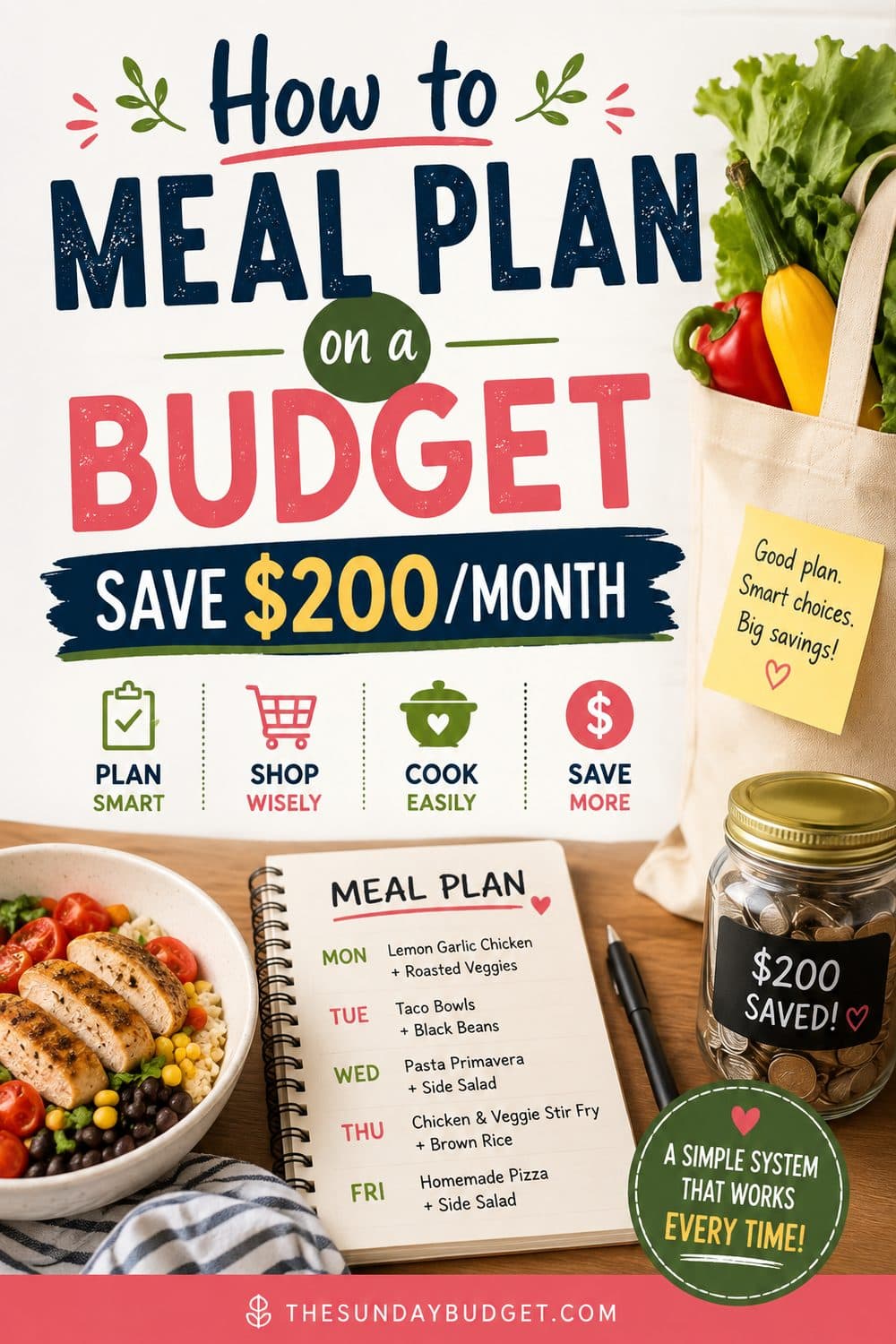
How to Meal Plan on a Budget (Save $200/Month)
By Nora Bennett · August 1, 2026

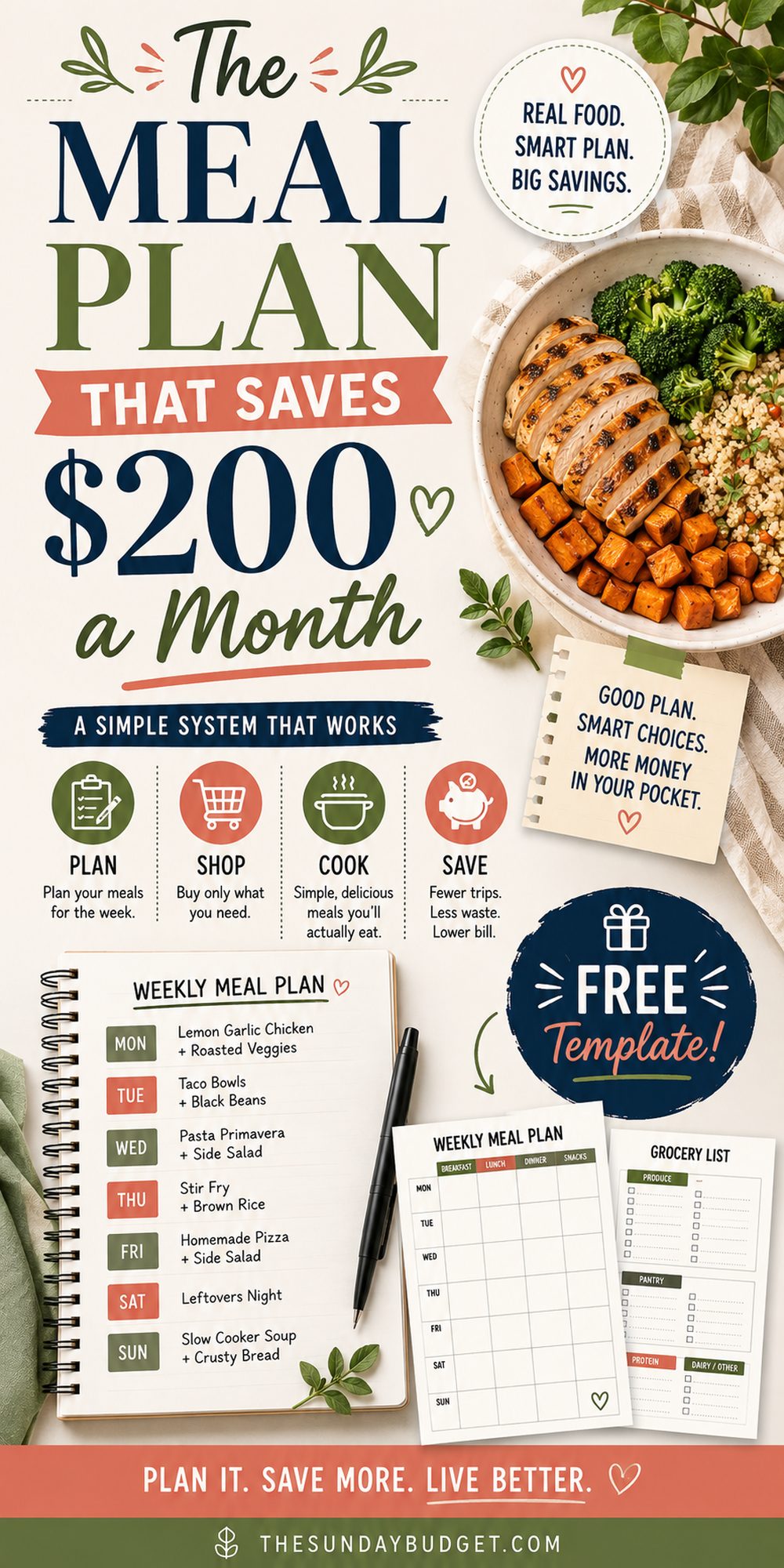
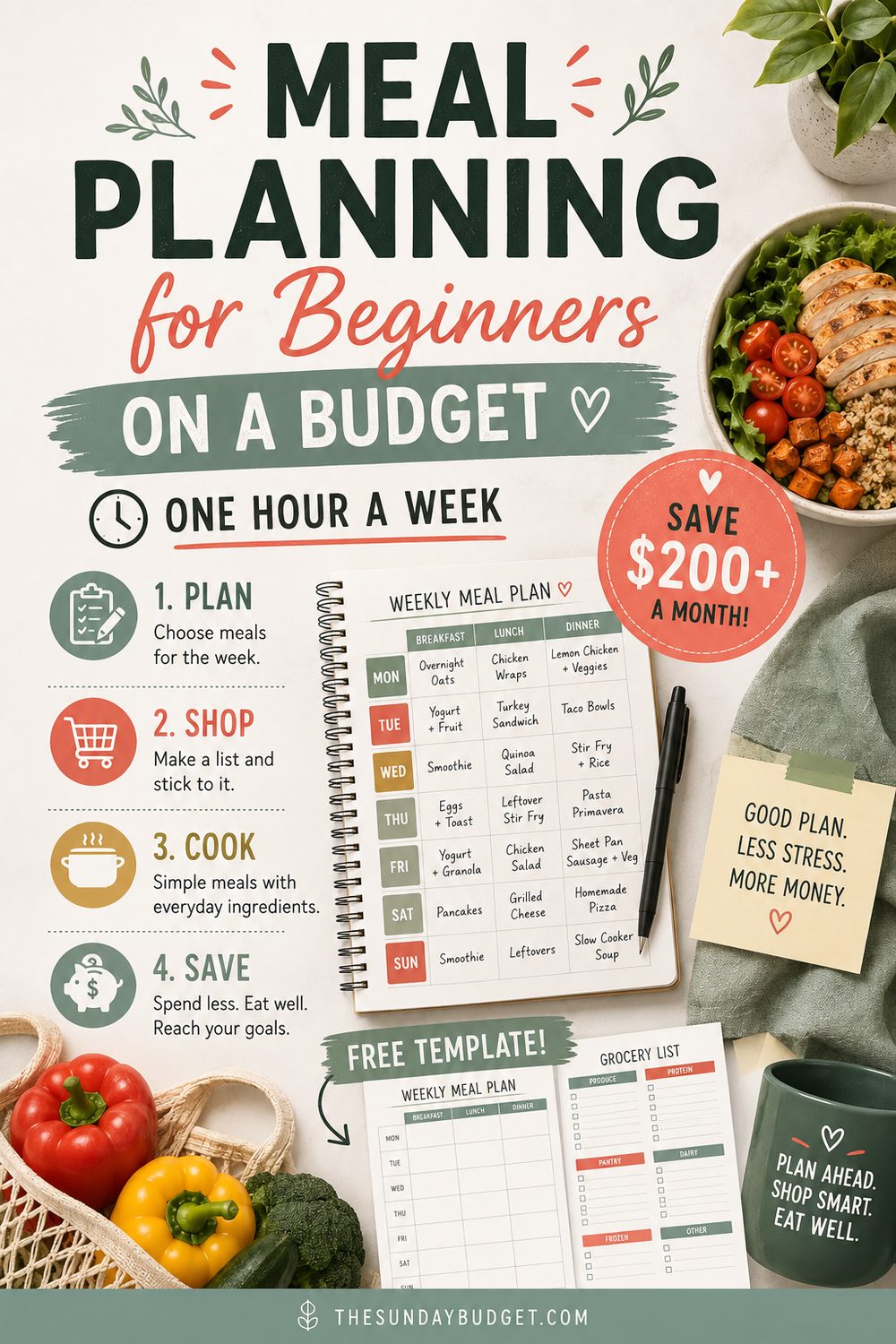
Groceries are the biggest flexible number in almost every budget: rent is fixed, the car payment is fixed, but the food line moves $200–400 a month depending on nothing but planning. That's what makes meal planning on a budget the single highest-leverage frugal habit there is: thirty minutes on Sunday, and the same household eats as well or better for meaningfully less. Here's the method, the math behind the $200 claim (it's not hand-waving), and the tricks that keep it working past week two.
Where the $200 actually comes from
Two leaks, both plugged by planning:
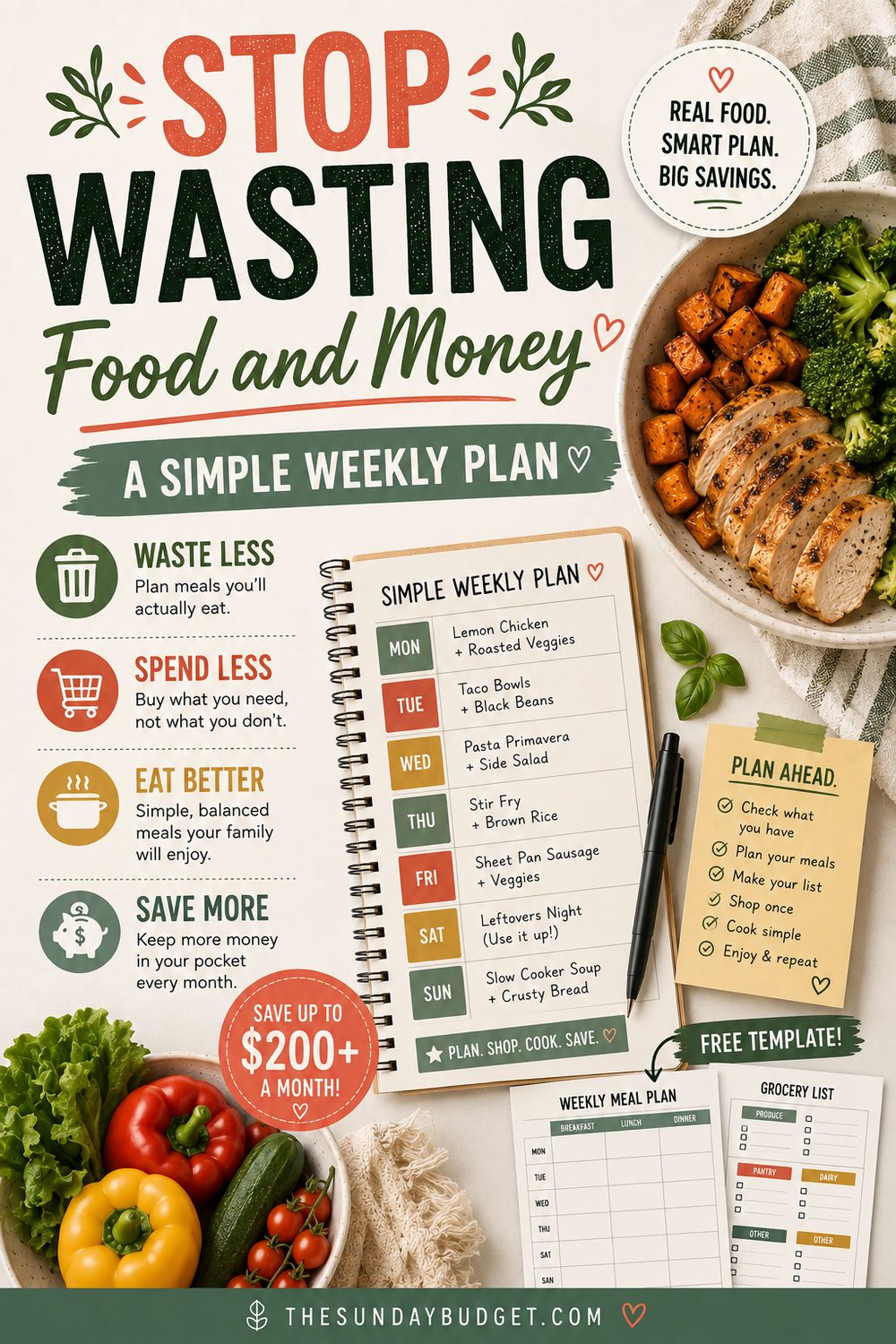
Leak 1: Food waste. Households routinely throw away a meaningful share of the groceries they buy, the wilted spinach bought for no particular meal, the leftovers with no plan. On a $600/month grocery spend, even a fifth wasted is $120 in the bin. Planning attacks waste directly because everything bought has an assigned meal, every ingredient gets a job, same logic as dollars.
Leak 2: The 6pm surrender. Takeout ordered because nobody decided dinner isn't a treat. It's a $35 penalty for not having a plan, the leakiest line on most statements. Displacing four or five surrender-orders a month is $100–150 by itself, and the planned version of a treat night still exists, chosen, budgeted, guilt-free.
Plug both and $200/month is the conservative outcome for a family; even a single person typically finds $80–120.
Our grocery line was $612 the month I first tracked it honestly. It is around $430 now, and the only thing that changed is that I plan five dinners on Sunday instead of deciding at 6pm seven times a week. We eat better, if anything. Thursday is scraps night and it is somehow everyone's favourite.
The 30-minute Sunday method
Part of the Sunday reset, right after the money check-in, kitchen edition:
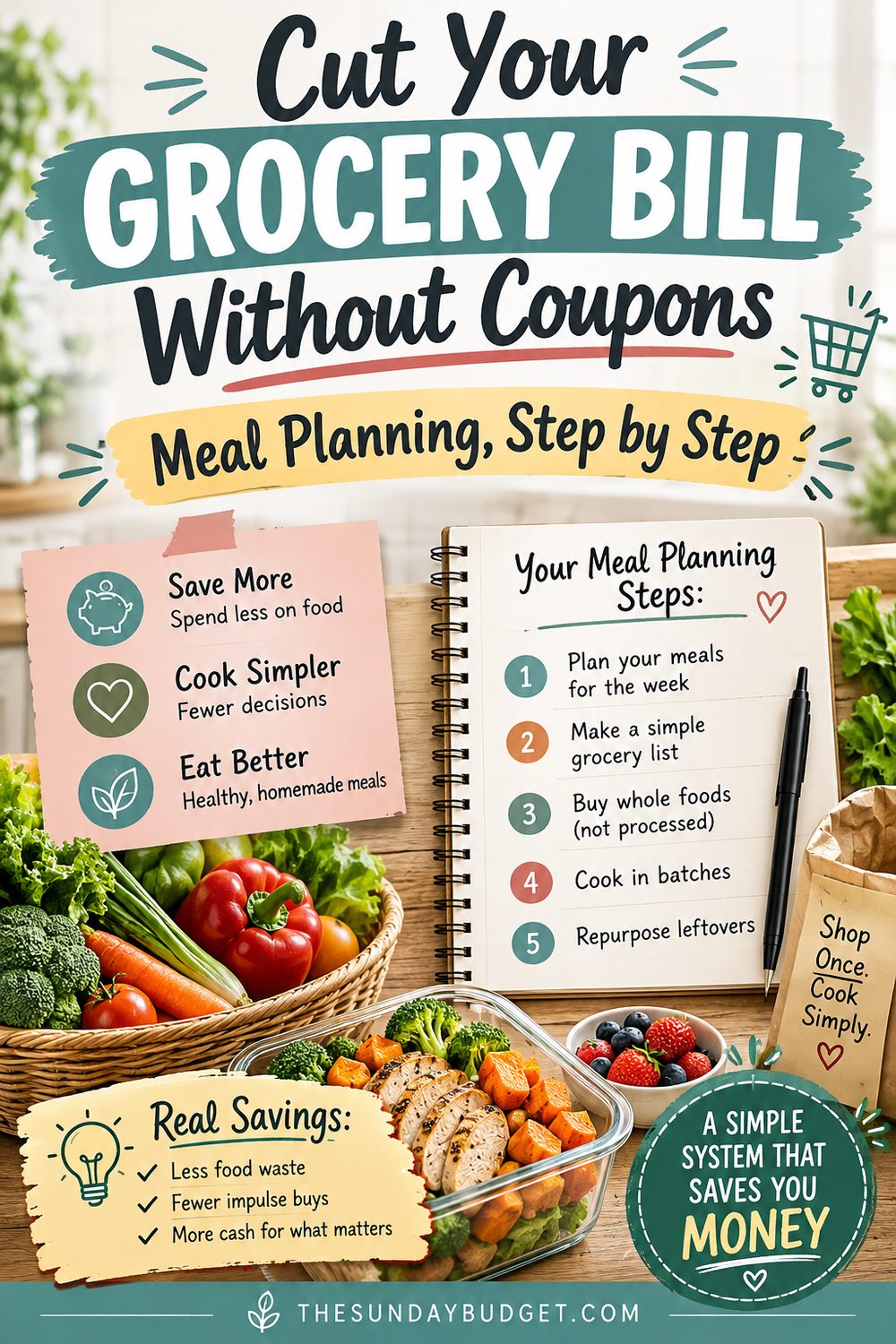
1. Shop your own kitchen first (5 min). Fridge, freezer, pantry: what needs using this week? The wilting vegetables and the mystery freezer bag are this week's starting ingredients, pantry-first is the frugal reflex.
2. Check the sales (5 min). Store app or flyer: what protein and produce are on sale? Planning around loss-leaders instead of cravings cuts the same meals by 20–30%.
3. Pick five dinners, not seven (10 min). Five planned dinners + one leftovers night + one flex night (the planned treat, or scraps improv) covers a week honestly. Seven rigid dinners is how meal plans die, perfection is the failure mode here too.
4. Write the list from the meals (5 min). Every item on the list traces to a meal; anything else is the snack-aisle adventure asking for a job it doesn't have.
5. Shop once (and only once). One trip, with the list. The midweek "just one thing" run averages $27: the plan's job is to make it unnecessary.
The ingredient-overlap trick (the real skill)
Budget meal planning isn't five unrelated recipes. It's ingredient Tetris: pick meals that share components so everything gets fully used and nothing buys a one-trick specialty item.
A worked week: a roast chicken (night 1) becomes chicken-rice bowls (night 2) and its carcass becomes soup stock (night 4). The cabbage does duty in a stir-fry (night 3) and as slaw (night 1). Rice appears three times wearing different outfits. One pack of tortillas serves taco night and breakfast quesadillas. The shopping list gets shorter as the plan gets smarter. That's the direction of mastery.
Theme nights automate the whole thing: soup Sunday, taco Tuesday, pasta Thursday, leftovers Friday. Themes cut decision fatigue (the actual enemy of meal planning) while leaving infinite variety inside each theme.
A sample week, priced honestly
What the method looks like on paper: a two-person week built around a chicken on sale and a bag of rice:
| Night | Dinner | Approx. cost |
|---|---|---|
| Sunday | Roast chicken, potatoes, slaw | $9 |
| Monday | Chicken-rice bowls (last night's bird) | $4 |
| Tuesday | Black bean tacos (theme night) | $6 |
| Wednesday | Stir-fry (sale vegetables + rice) | $7 |
| Thursday | Chicken-carcass soup + bread | $5 |
| Friday | Leftovers night | $0 |
| Saturday | Flex night, planned takeout, budgeted | $30 |
| Week total | $61 |
Add breakfasts, lunches, and staples and the week lands near $95–110 for two people: against the $150–180 the same unplanned week typically costs once the waste and the surrender-orders are counted. The takeout is in the plan, the chicken worked three shifts, and nothing died in the crisper drawer. That gap, run for a month, is the $200.
Budget tactics at the store
- Unit price over sticker price, the shelf tag's small print settles every "bulk deal" claim
- Store brands for staples, keep the two name brands you can genuinely taste; switch the rest
- Frozen vegetables without shame, nutritionally equivalent, zero waste, half the price out of season
- Whole over prepped, pre-cut is paying triple for knife work
- Meat as ingredient, not centerpiece twice a week, stir-fries, soups, and beans-forward meals cost half of slab-of-protein nights
- Freeze the sale, when the good protein hits its low, buy double and freeze half; the freezer is a savings account with a door
Track it like the experiment it is
Give groceries their own category in the planner and watch the number for a month before-and-after, the drop is the motivation. Log the grocery runs in the Expense Log, watch the envelope-style fill bar on the Monthly Budget tab, and put the difference somewhere visible: a sinking fund, the emergency fund, or the debt. Saved money that isn't moved wanders back.
Frequently asked questions
My family is picky: does this still work? Even better, honestly: build the five dinners from your household's existing top-ten meals rather than aspirational recipes. Meal planning isn't a cuisine upgrade program; it's a deciding-in-advance program. Rotate the greatest hits, slot one new experiment a week at most.
Are meal kits cheaper than takeout? Cheaper than takeout, pricier than planning: kits run $9–12 a serving versus $3–5 for the same dish self-planned. They're a legitimate transition tool if the skill you lack is knowing what to cook; graduate by keeping the recipe cards and buying the ingredients yourself.
I don't have time to cook five nights. Then don't: plan a batch-cooking session instead: one Sunday hour producing three meals' worth, plus a leftovers night and a flex night. Meal planning saves the money; the cooking schedule is whatever your week can hold.
Does shopping at a discount grocer really matter? The store choice can be worth 20–30% on an identical list: if there's a discount grocer near you, run your normal list through it once as an experiment. Combined with planning, that's how $600 months become $400 months.
Plan five dinners this Sunday
Kitchen audit, sales check, five dinners, one list, one trip: thirty minutes, this Sunday, and watch the grocery line in the planner tell you what it was worth. The $200 doesn't come from eating less. It comes from deciding first: which, you may have noticed by now, is this entire site's answer to everything.

Written by
I fixed my own money with a spreadsheet and a Sunday morning, and now I build the tools I wish I’d had. I manage a dental practice in Greensboro, North Carolina, and I have never once told anyone their problem was the coffee.