50 Frugal Living Tips That Don't Feel Like Sacrifice
By Nora Bennett · July 30, 2026

Frugal living is not a competition to spend the least. It is the practice of removing costs that add little value so you can protect necessities, build financial stability, and spend more confidently on what matters.
That is why the best frugal changes often feel surprisingly ordinary: cancel a service nobody uses, plan around the food already at home, repair an air leak, compare insurance with the same coverage, or wait two days before an impulse purchase. These changes reduce waste without requiring a joyless life.
This guide contains 50 detailed frugal living tips for 2026, but do not attempt all 50. Choose five to ten that fit your household, test them for one month, and keep only the changes whose savings are worth the time and inconvenience.
Start with the highest-value changes
Do not spend hours saving pennies while an unused annual subscription or mismatched insurance policy goes untouched.
Use this order:
- Fees and unused recurring charges: bank fees, subscriptions, memberships, and forgotten renewals.
- Large recurring bills: insurance, phone, internet, utilities, and transport.
- Frequent variable spending: groceries, delivery, convenience purchases, and entertainment.
- Small household habits: disposable products, standby energy, and minor shopping defaults.
For every change, calculate the net result:
Old monthly cost − new monthly cost − replacement costs = verified monthly savings
Do not count an advertised estimate as your savings. Measure your own bill or transactions before and after the change.
Food and kitchen: tips 1–12
1. Shop the food already in your home
Before making a grocery list, check the refrigerator, freezer, and pantry. Choose meals that use open packages and food nearing the end of its useful life. Keep a short “use first” list where everyone can see it.
Do not build a detailed inventory system you will abandon. Track only the items your household commonly duplicates, forgets, or wastes.
2. Plan meals around the week you will actually have
Look at work, school, appointments, and evenings away before choosing meals. Put quick meals on busy nights and save longer recipes for days with enough time.
A realistic meal plan includes backup food for the night when the original plan fails. USDA resources recommend checking food on hand, planning meals, and creating a shopping list; its meal-planning and budgeting collection offers practical examples.
3. Build the list before checking promotions
Sales flyers, coupons, and loyalty offers can reduce the price of something you already need. They can also persuade you to buy an unnecessary quantity.
Write the list first. Then match promotions to it, compare unit prices, and confirm that the sale size can be used safely. A discount is not savings when the product spoils or replaces a less expensive alternative.
4. Compare unit prices, not package prices
The larger package is not always the better deal. Use the shelf's price per ounce, pound, liter, or count—or calculate it yourself when stores use inconsistent units.
Choose the lower unit price only when storage, cash flow, and likely usage make sense. A household that needs the smaller package should not tie up grocery money in a bulk “bargain.”
5. Test store brands one product at a time
Choose one staple, compare ingredients and package size, and test the store brand. Keep it if the household likes it and return to the preferred brand if the alternative performs poorly or goes unused.
Do not substitute automatically when allergies, medical guidance, dietary requirements, or trusted product performance make a specific option important.
6. Cook once and plan the second use
Doubling a meal saves money only if the second portion is eaten. Decide before cooking whether it will become tomorrow's lunch, another dinner, or a labeled freezer portion.
Cool and store food safely. USDA guidance says most cooked leftovers should be refrigerated and used within three to four days or frozen; review its food-safety basics for temperatures and storage guidance.
7. Create a leftovers appointment
Choose one lunch or dinner each week for leftovers. Put older safe items at eye level and label containers with the date.
“Scraps night” does not have to mean mixing everything together. Serve small portions as they are, turn compatible ingredients into soup or fried rice, or freeze them before they become questionable. When in doubt about food safety, discard the item rather than treating frugality as a reason to take a risk.
8. Freeze food in usable portions
Freezing a family-size package as one solid block can make it difficult to use. Divide food into portions, remove excess air when appropriate, label the contents and date, and maintain enough freezer space for air circulation.
Check whether the product freezes well and how it should be thawed. Buy extra during a sale only when the final unit price is lower and the food fits your normal meals.
9. Keep two realistic emergency meals
The alternative to takeout on a difficult night is not a complicated recipe. Keep two meals your household will actually eat with minimal preparation.
The right options depend on dietary needs and energy: frozen meals, soup and bread, eggs and toast, pasta, or another quick combination. Replace each backup after using it so the system is ready for the next busy night.
10. Pack the easiest acceptable lunch
A homemade lunch does not need to be impressive. Leftovers, a sandwich, a snack plate, or another repeatable option can replace some unplanned purchases.
Start with one or two days a week. Include food you enjoy and can store safely. If workplace access, disability, travel, or schedule makes packed food impractical, reduce a different convenience cost rather than turning lunch into a daily struggle.
11. Refill water only when local water is suitable
A reusable bottle can replace routine bottled-water purchases, but safe tap water cannot be assumed everywhere.
Check your public water system's EPA Consumer Confidence Report, or follow appropriate testing guidance for a private well. If a filter is needed for taste or a specific contaminant, choose one designed for that purpose and replace it on schedule. Keep bottled water when local guidance, travel, health, or emergency preparedness requires it.
12. Make coffee spending intentional
Count every café drink, pod, bottled coffee, and bag of beans for four weeks. Keep the format you enjoy most and simplify overlapping systems.
A planned café visit may be worth more than forgettable drive-through stops. Pods may be practical when they prevent wasted coffee or expensive purchases away from home. Compare cost per serving using what you actually drink rather than declaring one method universally best.
Home and utilities: tips 13–22
13. Read the utility bill before changing habits
Record usage—not only the amount due—because rates, weather, and fees can change. Compare the same season across years when possible.
Your utility may offer hourly, daily, or appliance-level data, a budget-billing option, time-of-use rates, or a home energy audit. Understand the tariff before shifting usage; off-peak savings exist only where the plan actually prices time differently.
14. Seal simple air leaks safely
Inspect accessible doors and windows for worn weatherstripping or visible gaps. Low-cost weatherstripping and door sweeps can improve comfort when installed correctly.
Do not block intentional ventilation, combustion-air openings, drainage, or required egress. Renters should check lease rules, and persistent moisture or major building-envelope problems may require a landlord or qualified professional. The Department of Energy identifies air sealing and weatherstripping as common efficiency improvements in its home energy guidance.
15. Adjust heating and cooling around occupancy
Use a schedule that reduces heating or cooling when the home is empty or during suitable sleeping hours, then restores comfort before people return.
The appropriate temperature depends on climate, humidity, building design, health, pets, and equipment. Protect anyone sensitive to heat or cold, and avoid settings that could freeze pipes or create unsafe indoor conditions. Savings should come from avoiding unnecessary conditioning—not tolerating dangerous temperatures.
16. Review the water-heater setting carefully
The Department of Energy says 120°F generally meets many household needs and can reduce energy use and scald risk. Before changing a setting, read the manufacturer's instructions and consider dishwasher requirements, plumbing design, health needs, and local guidance.
Do not adjust fuel-burning equipment or open service panels if you are uncertain. Ask a landlord, plumber, or qualified technician. See the DOE's broader Energy Saver guide.
17. Wash appropriate laundry in cooler water
Follow garment labels, detergent instructions, and washer guidance. Cooler cycles can reduce water-heating energy for ordinary loads, while some heavily soiled items, illness-related laundry, or sanitation needs may require a different temperature and handling process.
Wash full loads when the machine allows, but do not overload it. A load that must be washed again is not efficient.
18. Reduce dryer time without damaging clothes
Clean the lint filter after each load, separate heavy and light fabrics when practical, use moisture-sensing settings, and air-dry suitable items.
Follow dryer-vent maintenance and fire-safety guidance. Do not hang wet items where they create indoor moisture problems, and use the dryer where climate, disability, space, or caregiving needs make it the better tool.
19. Replace high-use bulbs with efficient LEDs
Start with lights used for the most hours rather than discarding every working bulb immediately. Choose the correct base, brightness, color temperature, enclosure rating, and dimmer compatibility.
Keep receipts and packaging until compatibility is confirmed. Special fixtures, ovens, appliances, and heat-sensitive locations may require specific bulb types.
20. Use power strips selectively
Some electronics draw power while idle. Group appropriate entertainment or desk equipment on an accessible switched power strip and turn it off when the group will not be used.
Do not disconnect medical equipment, refrigerators, routers needed for security or phone service, smart-home safety devices, recording equipment, or anything the manufacturer says must remain powered. The DOE explains standby power and recommends selective shutdown rather than indiscriminate unplugging.
21. Maintain before replacing
Use the manufacturer's schedule for filters, descaling, cleaning, lubrication, and inspections. Small maintenance can preserve performance and reveal problems before a major failure.
Know the limit of do-it-yourself work. Use qualified help for gas, mains electricity, structural repairs, refrigerants, roofing, major plumbing, or any job beyond your skills and equipment. Check product recalls before repairing or buying replacement parts.
22. Build a home-maintenance sinking fund
Estimate annual maintenance from your actual property, lease responsibilities, appliance age, and recent history. Divide the target by the months or paychecks remaining and save it separately.
Renters still need a smaller fund for items they own, moving costs, renter responsibilities, and insurance deductibles. A maintenance fund does not replace an emergency fund; it prepares for costs that are likely even when the exact date is unknown.
Shopping and possessions: tips 23–33
23. Keep a waiting list for nonessential purchases
Put the item, price, date, and intended use on a list. Wait 48 hours for ordinary wants and longer for expensive purchases.
During the wait, check whether you own an alternative, can borrow it, or still want it after the original trigger passes. The rule is not for urgent safety, medical, repair, or income-producing needs.
24. Remove marketing from your routine
Unsubscribe from promotional email and text lists you do not use intentionally. Disable shopping-app alerts and remove saved retailer tabs from your browser start page.
Keep alerts that support a planned purchase, medication, safety recall, or essential service. The aim is to reduce manufactured urgency, not lose important account notifications.
25. Compare the total delivered cost
Online prices can exclude shipping, taxes, handling, required accessories, restocking fees, and return postage. Compare the exact model and full checkout total across reputable sellers.
The FTC recommends checking sellers, product descriptions, total costs, delivery promises, and return policies. Its online shopping guidance also explains that labels such as “refurbished” or “close-out” may indicate imperfect condition.
26. Buy refurbished only with clear protections
Confirm who performed the refurbishment, what was tested, battery condition where relevant, included accessories, cosmetic grade, return period, and written warranty.
“Manufacturer refurbished” is not automatically the best deal, and a marketplace badge is not a substitute for terms you can read. Compare the discount with the shorter warranty and expected life. Save the listing, receipt, serial number, and warranty.
27. Buy used where condition can be evaluated safely
Furniture, tools, books, dishes, sports equipment, and many household items can offer strong used value. Inspect condition, dimensions, pests, odors, missing parts, and recall status.
Do not apply a blanket used-first rule to safety-critical products, including items whose crash history, expiration, hygiene, or internal condition cannot be verified. Research the exact product category before buying.
28. Borrow or rent before buying a one-time tool
For a party item, specialty tool, formal outfit, camping item, or cleaning machine, compare borrowing, rental, library-of-things programs, and purchase.
Confirm deposits, damage responsibility, pickup time, consumables, and late fees. Buying can still be cheaper when repeated rental cost, availability, or work downtime exceeds ownership cost.
29. Use cost per use as a decision check
Estimate realistic uses—not an ideal future self—and divide the full cost by that number.
Purchase price + maintenance + required accessories ÷ expected uses = estimated cost per use
The method can justify a durable daily-use product, but it does not prove a high-priced item is high quality. Check repairability, warranty, comfort, and independent information too.
30. Keep a replacement list before things fail
List aging phones, appliances, work equipment, furniture, and other likely replacements. Note the problem that would justify replacement, an approximate budget, and features that actually matter.
Save monthly in a sinking fund. Planning reduces emergency purchases and makes it easier to compare models without pressure.
31. Return mistakes while the return window is open
Create one location for returns and put the deadline on your calendar. Keep packaging until the item is tested when practical.
Before returning, check refund method, shipping cost, restocking fee, and whether the seller requires authorization. Do not spend more time and transport than a low-value return is worth; use that result to improve the next purchase.
32. Stop adding filler for free shipping
Compare paying the shipping fee with adding an unplanned item. If the filler costs more than delivery and was not already needed, it increases spending.
Wait to combine genuine needs, use free pickup when total travel cost makes sense, or compare a local seller. A threshold is the retailer's sales tool, not your savings goal.
33. Use one-in, one-out as an inventory signal
When a new clothing, kitchen, décor, or hobby item enters, review the closest item already owned. Sell, donate, recycle, or responsibly discard what no longer serves a purpose.
The rule should not force disposal of necessary backups, sentimental items, or supplies consumed regularly. Its job is to reveal duplication before the next purchase.
Transport: tips 34–39
34. Combine compatible trips
Group errands by location and schedule where practical. Check opening hours, stock, appointment times, traffic, and cold-food storage before leaving.
Do not make a long special trip to save a small amount. Compare fuel, fares, tolls, parking, and time with delivery or a closer store.
35. Check tire pressure monthly
Use the vehicle manufacturer's cold-pressure recommendation on the driver's door label or owner's manual—not the maximum pressure printed on the tire.
NHTSA recommends checking all tires, including the spare, at least monthly when cold. Proper pressure supports safety, tire life, and fuel efficiency. Follow its detailed tire-maintenance guidance, and have damage or unusual wear inspected.
36. Follow the vehicle maintenance schedule
Use the owner's manual rather than generic upsell intervals. Track oil, fluids, filters, tires, brakes, and other service relevant to the vehicle and driving conditions.
Ask for written estimates and clarify which work is required, recommended, or diagnostic. Deferring safety-critical maintenance is not frugal; neither is authorizing work you do not understand.
37. Price the entire commute
Compare driving, transit, carpooling, cycling, walking, and remote-work options using fares, fuel, parking, tolls, maintenance, time, weather, safety, and reliability.
Test an alternative one day a week before making a major change. The cheapest fare is not a saving if missed connections threaten income or caregiving responsibilities.
38. Compare insurance using identical coverage
Gather quotes every year or two using the same drivers, vehicles, deductibles, limits, endorsements, and expected mileage. Review customer service, licensing, financial strength, and the effect on bundled policies—not just premium.
NAIC's auto-insurance shopping tool recommends comparing equivalent coverage and checking what discounts would be gained or lost. Never cancel the old policy before the new coverage is confirmed active.
39. Plan parking, tolls, and charging before departure
For unfamiliar trips, compare parking rates, validation, public transit, toll routes, and—if relevant—charging availability before leaving.
A slightly longer route can cost less, but do not sacrifice safety, reliability, or a required arrival time. Save the method that works as a note for the next visit.
Fun and social life: tips 40–44
40. Budget fun money instead of eliminating it
Choose an amount after essentials, required payments, and near-term priorities. Spend it without guilt inside that boundary.
When money is tight, free or low-cost fun may carry more of the month, but a visible category is still more honest than pretending no optional spending will occur. Adjust the amount as circumstances change.
41. Rotate entertainment subscriptions
Keep the service currently being used and pause the rest when terms allow. Put renewal and cancellation dates on the calendar and confirm whether profiles or saved content will remain.
Review bundles carefully; they save money only when you would choose the included services separately. Keep cancellation confirmations and check the next statement.
42. Use the library beyond books
Check your local library's actual offerings: ebooks, audiobooks, research databases, classes, passes, equipment, or a library-of-things program may be available.
Availability, wait times, replacement liability, and borrowing rules vary. Use library access to replace purchases you would otherwise make, not to create an administrative hobby you do not enjoy.
43. Change the format, not the relationship
Suggest a potluck, picnic, breakfast, coffee walk, home movie, free community event, or off-peak gathering instead of canceling social plans automatically.
Make the invitation clear and comfortable: provide the cost expectation, accommodate dietary and accessibility needs, and avoid shifting an unfair amount of work to the host.
44. Try hobbies before buying the full setup
Borrow equipment, take an introductory class, rent once, or buy a small starter kit. Wait until the activity survives several sessions before purchasing premium gear.
For skill exchanges, remember that commercial barter can have tax consequences. The IRS says the fair market value of goods or services received through bartering is generally taxable; review IRS Topic 420 when an exchange goes beyond an informal noncommercial favor.
Money systems: tips 45–50
45. Audit recurring charges quarterly
Search bank, card, app-store, and payment-platform statements. Record every recurring merchant, amount, renewal date, owner, and cancellation method.
Keep services that deliver enough value. Cancel duplicates and unused plans, save the confirmation, and verify that billing stops. A quarterly calendar appointment prevents the next forgotten renewal.
46. Eliminate avoidable bank fees carefully
Review maintenance, overdraft, nonsufficient-funds, ATM, transfer, and paper-statement fees. Ask how each fee can be avoided and compare other account options based on your actual usage.
The CFPB recommends comparing fees, access, service, and account features rather than looking at one charge alone. Its checking-account guidance explains overdraft choices and comparison factors. Move automatic deposits and payments safely before closing an account.
47. Create sinking funds for predictable costs
List annual, seasonal, and irregular expenses such as insurance, maintenance, school costs, holidays, professional fees, and pet care. Estimate the amount and divide by the paychecks or months remaining.
Keep the funds separate enough that they are not mistaken for spending money. When the cost arrives, update the next target using the real bill.
48. Automate only an amount cash flow can support
Schedule savings after income arrives and before optional spending—but only after accounting for bills and essentials due before the next payday.
Start small, keep a checking cushion, and use low-balance alerts. For variable income, transfer a percentage after each payment clears. Automation that causes overdraft fees or repeated transfers back is too aggressive.
49. Compare recurring services with the same requirements
Review phone, internet, insurance, and other major services. Write down current price, taxes, fees, equipment, contract end date, speed or coverage, and features actually used.
Ask the current provider about appropriate plans, then compare competitors on total cost and service—not an introductory price alone. Check installation, cancellation, device payoff, return, and future price terms before switching.
50. Hold a ten-minute weekly money review
Once a week, confirm transactions, check bills due before the next review, compare categories with the plan, and choose one action.
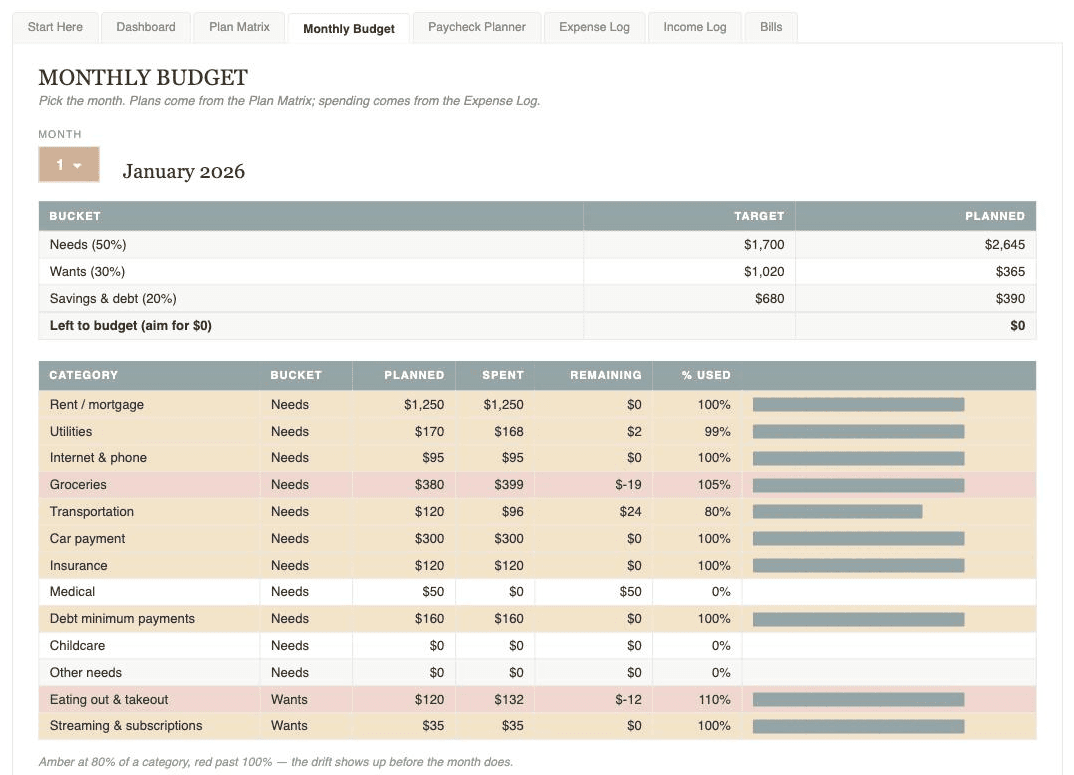
Transfer proven savings to a named purpose instead of leaving the amount in checking. The review is where individual tips become a repeatable system.
A 30-day frugal living plan
Week 1: Find the invisible costs
- Audit subscriptions, memberships, bank fees, and automatic renewals.
- Record utility usage and recurring-service details.
- Choose one charge to cancel or renegotiate.
Week 2: Repair food systems
- Inventory the food most often wasted or duplicated.
- Plan meals around the calendar and create two backup meals.
- Compare unit prices on five frequently purchased items.
Week 3: Reduce buying pressure
- Start a 48-hour waiting list.
- Unsubscribe from unnecessary marketing.
- Return one purchase that does not work.
- Research one likely future replacement before it becomes urgent.
Week 4: Measure and keep only what worked
- Compare actual spending and bills with the previous baseline.
- Subtract replacement costs.
- Keep the changes whose savings justify the effort.
- Transfer the verified amount to savings, debt, or a sinking fund.
What frugal living should never require
Do not reduce costs by skipping prescribed care, safe food and water, required insurance, essential maintenance, accessibility tools, or equipment needed to earn income.
Do not make a household member carry extra unpaid work without agreement. A cheaper meal system is not cheaper if one person loses every Sunday preparing it while everyone else receives the benefit.
Do not judge a convenience purchase without understanding the job it performs. Delivery, pre-cut food, paid help, and subscriptions can be worthwhile when they support health, disability, caregiving, safety, or reliable work.
Frequently asked questions
How many frugal tips should I start at once?
Choose five: one recurring charge, one food habit, one utility or home action, one shopping rule, and one money system. Test them for 30 days before adding more.
How do I know whether a tip is worth the effort?
Calculate verified net savings and consider time, reliability, safety, storage, and quality of life. A five-minute cancellation that saves monthly is high value. A complicated weekly process that saves very little may not be.
Is buying the cheapest product frugal?
Not automatically. Compare total cost, useful life, repairability, energy or consumable requirements, warranty, and how often it will be used. Frugal living seeks value, not the lowest receipt total.
What if my family dislikes the change?
Ask what function was lost. Restore the original choice, adjust the replacement, or choose a different category. A change that creates constant conflict or rebound spending is not a durable saving.
Where should the savings go?
Choose before beginning: an emergency fund, debt payment, sinking fund, retirement contribution, or planned purchase. Move the verified amount so it does not disappear into general spending.
Pick ten, not fifty
Start with your statements and bills, not this list. Find the five recurring or repeated costs that deliver the least value, then match them to the relevant tips.
Frugal living works when the result is visible: fewer fees, less waste, safer maintenance, a calmer budget, and more money directed toward choices you would make again.



Written by
I fixed my own money with a spreadsheet and a Sunday morning, and now I build the tools I wish I’d had. I manage a dental practice in Greensboro, North Carolina, and I have never once told anyone their problem was the coffee.