How to Build a $1,000 Emergency Fund in 3 Months
By Nora Bennett · July 21, 2026

A $1,000 emergency fund will not solve every financial emergency. It will not replace several months of income, cover every insurance deductible, or rescue a household from a long job loss.
What it can do is create a useful first layer of protection. A tire replacement, urgent prescription, plumbing call, or last-minute trip no longer has to become new credit-card debt automatically. That matters: the Federal Reserve's latest survey data show that 63% of U.S. adults could cover a $400 emergency expense with cash or its equivalent. A starter fund moves you toward that ability while you build a larger reserve.
This is not a “stop buying coffee and magically find $1,000” plan. It uses honest math, three sources of savings, and a 13-week schedule you can adapt to your pay cycle.
First, decide whether $1,000 is the right starter target
Treat $1,000 as a starter target, not a universal financial rule.
Start lower if reaching $1,000 in three months would make you miss rent, utilities, food, insurance, medicine, or minimum debt payments. A $250 buffer is better than a plan that collapses in week two. You can use milestones:
- Milestone 1: $250 for smaller surprises and fewer overdrafts.
- Milestone 2: $500 for a more useful cash buffer.
- Milestone 3: $1,000 for a stronger starter fund.
Start higher if one predictable risk could easily cost more than $1,000. That may apply if you have a high insurance deductible, an older car you need for work, dependents, pets, a home with aging systems, variable income, or limited access to family support.
The Consumer Financial Protection Bureau recommends basing the amount on your circumstances and the unexpected expenses you have faced before. Look at your own last two years. What surprise cost the most? What amount would let you handle the next version without borrowing?
Your starter target is the smaller number you can reach soon, but the larger number that would meaningfully protect your household. For this guide, we will use $1,000.
The three-month math by pay schedule
Thirteen weeks is close enough to feel real and long enough to build a repeatable habit.
| If you save… | Deposit needed | Number of deposits | Total |
|---|---|---|---|
| Weekly | $77 | 13 | $1,001 |
| Every two weeks | $154 | 6, plus $76 | $1,000 |
| Twice a month | $167 | 6 | $1,002 |
| Monthly | $334 | 3 | $1,002 |
These numbers are targets, not commands. If $77 a week is not available after essentials and minimum payments, do not force it and then use a credit card for groceries. Choose one of these adjustments:
- Lower the first milestone to $250 or $500.
- Extend the deadline to 26 weeks, which makes the target about $39 a week.
- Keep a smaller recurring transfer and close the gap with one-time income.
- Combine a smaller target with a plan to increase income or stabilize bills.
The deadline should create focus, not financial damage.
Find your safe weekly base
Before automating anything, calculate what your cash flow can support.
Start with the money expected before your next payday. Subtract:
- housing and utilities;
- groceries, transport, medicine, and other essentials;
- insurance and minimum debt payments;
- bills due before the next paycheck; and
- a small checking-account cushion so the transfer does not trigger an overdraft.
What remains is available for savings, extra debt payments, and optional spending. Your safe weekly base is the amount you can transfer repeatedly without having to transfer it back.
For example, if you can safely save $35 a week, your recurring base contributes $455 over 13 weeks. Your remaining gap is $545. That gap now has a name, which makes it possible to plan instead of hope.
If your safe base is $10, use $10. Consistency is more valuable than choosing an impressive number that lasts for one payday.
Build the $1,000 from three funding lanes
Most households will not find the full $1,000 by cutting expenses alone. A stronger plan uses three lanes at the same time.
Lane 1: A repeatable transfer
This is the amount that moves after every payday. Automate it for the day after your income arrives, when possible. The CFPB notes that recurring transfers can make saving more consistent, but it also warns you to watch your checking balance so automation does not cause overdraft fees.
Possible 13-week bases:
- $15 a week = $195
- $25 a week = $325
- $35 a week = $455
- $50 a week = $650
Choose the amount from your actual cash flow, not a percentage you saw online.
Lane 2: One-time money
This lane closes the largest part of the gap. Write down only money you can reasonably create or expect during the 13 weeks:
- sell unused electronics, furniture, tools, clothes, or hobby equipment;
- volunteer for a shift or short project if your health and schedule allow it;
- direct a confirmed refund, rebate, bonus, or gift to the fund;
- return unopened purchases that are still inside the return window; or
- collect money someone already owes you.
Do not count a tax refund before it is filed, an item before it sells, or overtime before it is approved. Planned money and hoped-for money are not the same.
Lane 3: Temporary expense reductions
Pick two or three reductions you can sustain for 13 weeks without cutting necessities:
- pause one or two subscriptions;
- plan one low-cost weekend each month;
- reduce takeout by one order a week;
- shop from the pantry before buying more food;
- call an insurer, phone provider, or internet provider to review the plan;
- move an annual bill to a sinking fund so it stops surprising you; or
- use a short no-spend challenge for categories where you already have enough.
Transfer the amount you actually avoid spending. If skipping takeout saved $24, move $24—not the $50 you hoped to save.
A realistic composite example
Suppose your plan is:
- $35 weekly base: $455
- sell four unused items: $260
- pause subscriptions and reduce takeout: $165
- one extra shift: $120
- Total: $1,000
Another household might save $60 weekly and need only $220 from the other lanes. A lower-income household might build $500 first with a $15 weekly base plus one-time sales. The system stays the same even when the numbers change.
Your practical 13-week schedule
The schedule below gives every week one job. Put the check-in on the same day—Sunday works well—so you always know the balance and the remaining gap.
| Week | Main action | Running target |
|---|---|---|
| 1 | Open or designate the account; make the first transfer | $77 |
| 2 | List five unused items for sale | $154 |
| 3 | Cancel or pause two low-value expenses | $231 |
| 4 | Review the first month; adjust the base if needed | $308 |
| 5 | Call one recurring-bill provider | $385 |
| 6 | Plan three low-cost meals from food already at home | $462 |
| 7 | Sell, donate, or relist anything still unsold | $539 |
| 8 | Run a midpoint check and calculate the exact gap | $616 |
| 9 | Choose one safe income boost or extra shift | $693 |
| 10 | Sweep genuine category leftovers into savings | $770 |
| 11 | Repeat the expense reduction that worked best | $847 |
| 12 | Protect the balance; plan the final top-up | $924 |
| 13 | Make the last deposit and write your fund rules | $1,000+ |
The running target is a guide. You may reach $350 after selling something in week two, then have a quiet week later. What matters is the direction and the updated gap.
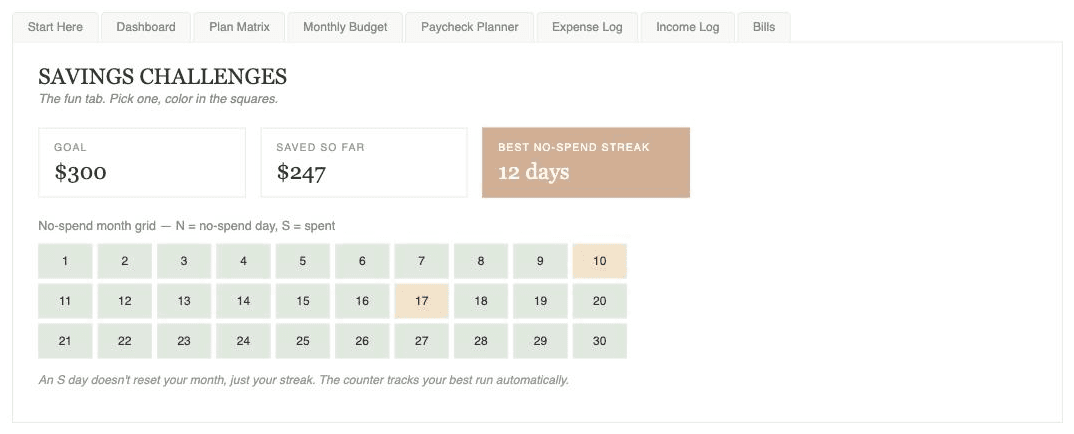
At every check-in, record four numbers:
- Current emergency-fund balance.
- Amount added this week.
- Amount still needed.
- Planned source of the next deposit.
Where should you keep the money?
For a starter emergency fund, prioritize safety, access, low fees, and separation from daily spending. Interest matters, but it is not the first job of this money.
A savings account at an insured bank or credit union is usually the simplest option. The FDIC automatically insures eligible deposits at FDIC-insured banks to at least $250,000, subject to ownership rules. The NCUA provides similar federal coverage for qualifying accounts at federally insured credit unions.
Before opening an account, check:
- no monthly maintenance fee, or a fee you can reliably waive;
- no minimum balance that makes the account impractical;
- how quickly transfers reach your checking account;
- whether instant transfers carry a fee;
- the annual percentage yield and whether it can change;
- withdrawal or transaction rules; and
- that the institution and account type have the insurance you expect.
The account can be at your existing institution if a separate savings account is enough to prevent casual spending. A different bank may create useful friction, but it is not required. Do not create so much friction that you cannot access the money when an urgent bill is due.
Keep the starter fund out of stocks, crypto, and other assets whose price can fall when you need the cash. A certificate of deposit may be insured, but an early-withdrawal penalty or delayed access can make it a poor home for your first $1,000. CDs can be considered later for a layer of a larger emergency reserve if the terms still leave enough money immediately available.
You may also keep a small amount of physical cash for a power outage or card-network problem, but storing the entire fund at home introduces theft, loss, and fire risk.
Decide what counts as an emergency before one happens
Use the fund only when the expense is:
- Unplanned: it was not a known bill with a known due date.
- Necessary: delaying it threatens health, safety, income, housing, or an essential service.
- Time-sensitive: waiting to save separately would make the outcome worse.
All three usually need to be true.
| Situation | Emergency fund? | Better category when it is not |
|---|---|---|
| Essential car repair needed to work | Usually yes | Car-maintenance sinking fund for future repairs |
| Urgent medical copay | Usually yes | Medical sinking fund for routine visits |
| Job loss and essential bills | Yes | Larger income-loss reserve after the starter fund |
| Annual insurance premium | No | Sinking fund; the date is known |
| Holiday gifts | No | Holiday sinking fund |
| A discounted vacation | No | Travel savings |
| Replacing a working phone during a sale | No | Technology sinking fund |
| Emergency travel for a close family crisis | Often yes | Family-travel sinking fund if this risk is recurring |
| A higher-than-usual utility bill | Maybe | First check whether the bill is incorrect; then use the fund only if essentials cannot absorb it |
The difference between an emergency fund and a sinking fund is timing. Emergency funds cover unplanned shocks. Sinking funds prepare for costs you know will eventually arrive, even when the exact date or amount is uncertain.
What to do when you use the fund
Using emergency savings for a real emergency is not failure. It is the reason the account exists.
Follow this sequence:
- Confirm that the expense passes your emergency test.
- Ask for the total price, available discounts, insurance coverage, and payment deadline.
- Use only the amount required rather than emptying the account automatically.
- Save the receipt and note what happened.
- Pause lower-priority goals temporarily and restart your recurring transfer.
- If the expense could recur, create a sinking fund for it after you refill the buffer.
If the bill is larger than your balance, the fund still reduces what you must borrow. Ask the provider about an interest-free payment plan, financial assistance, a lower cash price, or a revised due date before using high-cost credit. Avoid payday loans and products whose fees make the original emergency substantially more expensive.
Should you save $1,000 before paying debt?
There is no single order that fits every household, but a balanced starting point is:
- stay current on essentials;
- make at least the required minimum payments on every debt;
- capture an employer retirement match if available and affordable;
- build a small cash buffer; and
- then direct more money toward expensive debt while maintaining the buffer.
Why not send every spare dollar to debt immediately? Without any cash, the next repair may go straight back onto the card you just paid down. Why not ignore high-interest debt until you have several months saved? Because expensive interest can grow faster than savings.
One practical sequence is $250 first, then attack very high-cost debt while building toward $1,000 more slowly. Another is $1,000 first if your income is unstable, your household has dependents, or you face frequent car or medical risk. The debt payoff guide can help you choose the next step after the buffer exists.
If your income is tight
Do not cut food, medicine, required insurance, or essential utilities to hit an arbitrary savings deadline. Start with the amount that reduces risk without creating a different emergency.
Try this scaled version:
- target $250 in 13 weeks;
- save $10 weekly for $130;
- create $80 from one-time sales or returns;
- find $40 from two small temporary reductions;
- then keep the $10 transfer running until you reach $500.
If your budget is negative before savings, the first task is not optimization. It is stabilizing cash flow: apply for benefits you qualify for, contact bill providers before missing payments, review tax withholding where appropriate, and look for safe income options. The low-income budgeting guide walks through that order without pretending every problem can be solved by cutting discretionary spending.
If your income changes every month
A fixed $77 transfer may not work for freelancers, gig workers, seasonal workers, or commission earners. Use a floor-plus-percentage system instead:
- set a small minimum transfer you can make in a low-income week;
- add a percentage of every payment above your baseline;
- move the money when the payment clears, not at the end of the month; and
- keep tax money separate from emergency savings.
Example: transfer $10 every week plus 15% of income above your normal weekly baseline. A strong week accelerates the goal without committing next month's rent.
Variable income often calls for a larger final reserve because an income dip is not unusual. After the starter fund, build one month of essential expenses before moving toward a longer target.
If you share money with a partner
Agree on the withdrawal rules before the account grows. Both people should know:
- where the fund is held;
- how to access it;
- what situations qualify;
- whether either person can withdraw alone;
- the amount that requires a conversation; and
- how the fund will be replenished.
The goal is not to make emergency money inaccessible. It is to prevent one person from treating shared protection as personal spending money.
Common mistakes that slow the plan
Counting money twice
If a tax refund is assigned to debt, it cannot also complete the emergency fund. Give every expected lump sum one job.
Saving too aggressively, then transferring it back
A smaller transfer that stays saved beats a larger transfer that causes an overdraft or grocery shortage. Adjust the base after the first full pay cycle.
Treating credit limits as emergency savings
Available credit is borrowing capacity, not cash. A lender can reduce a limit, interest can raise the final cost, and a monthly payment appears after the crisis.
Leaving predictable costs unfunded
Car maintenance, school expenses, insurance premiums, holidays, and annual subscriptions are not surprises. Add small sinking funds so they stop draining the emergency account.
Chasing interest while ignoring access and fees
On a $1,000 balance, a slightly higher rate makes a modest difference. One monthly fee or urgent transfer charge can erase it. Compare the whole account, not only the advertised rate.
What comes after $1,000?
Do not stop at a round number. Build the next target from essential monthly expenses, not total lifestyle spending.
Add the monthly cost of:
- housing;
- basic utilities;
- groceries and household essentials;
- transport required for work and family needs;
- insurance;
- medicine and essential health costs;
- minimum debt payments; and
- essential childcare or dependent care.
Suppose that total is $2,400. Your next milestones could be:
- Starter fund: $1,000
- One month of essentials: $2,400
- Three months of essentials: $7,200
- Six months of essentials: $14,400
FINRA says three to six months of expenses is a useful long-term goal while any affordable amount helps. Your final target depends on job stability, household income sources, health, dependents, deductibles, and how quickly you could replace lost income. A two-income household with stable jobs may choose differently from a sole earner with variable income.
As the fund grows, you can layer it: keep the first portion immediately available and place later portions in other safe, liquid accounts with appropriate insurance and access. Review the amount once a year and after major changes such as moving, changing jobs, buying a home, or adding a dependent.
Frequently asked questions
Is $1,000 enough in 2026?
It is enough to be a useful starter fund for many households, not enough to guarantee protection from every emergency. Set a higher starter target if your likely urgent costs or deductibles exceed it, and continue toward several months of essentials after reaching it.
Should the account be at a different bank?
Only if the extra separation helps you avoid casual withdrawals without delaying genuine access. A separate savings account at your current insured institution may work just as well and may transfer faster.
Can I invest my emergency fund?
The first layer should not depend on selling an investment at a favorable price. Keep starter emergency money in a safe place with immediate access and no market risk. Invest money intended for longer-term goals according to your time horizon and risk tolerance, not money needed for the next urgent bill.
What if I miss a week?
Do not restart or punish yourself. Recalculate: current balance, weeks remaining, and remaining gap. Increase the next deposit only if cash flow safely allows it; otherwise extend the deadline.
What if I reach $1,000 early?
Write your withdrawal rules, keep the recurring transfer active, and aim for one month of essential expenses. You have built the system; now let it continue.
Start with these four actions
This week:
- Choose your starter target: $250, $500, $1,000, or a personalized amount.
- Open or designate a fee-free, insured savings account with practical access.
- Schedule the smallest repeatable transfer that your cash flow can support.
- List three realistic sources for the remaining gap—one sale, one temporary reduction, and one income opportunity.
Your emergency fund does not need a dramatic origin story. It needs a safe home, a repeatable deposit, and rules strong enough to protect it. Build the first layer in 13 weeks, then keep going until the amount matches the risks in your actual life.

Written by
I fixed my own money with a spreadsheet and a Sunday morning, and now I build the tools I wish I’d had. I manage a dental practice in Greensboro, North Carolina, and I have never once told anyone their problem was the coffee.