Sinking Funds Explained: How Much to Save + 20 Categories
By Nora Bennett · June 27, 2026 · Updated August 6, 2026

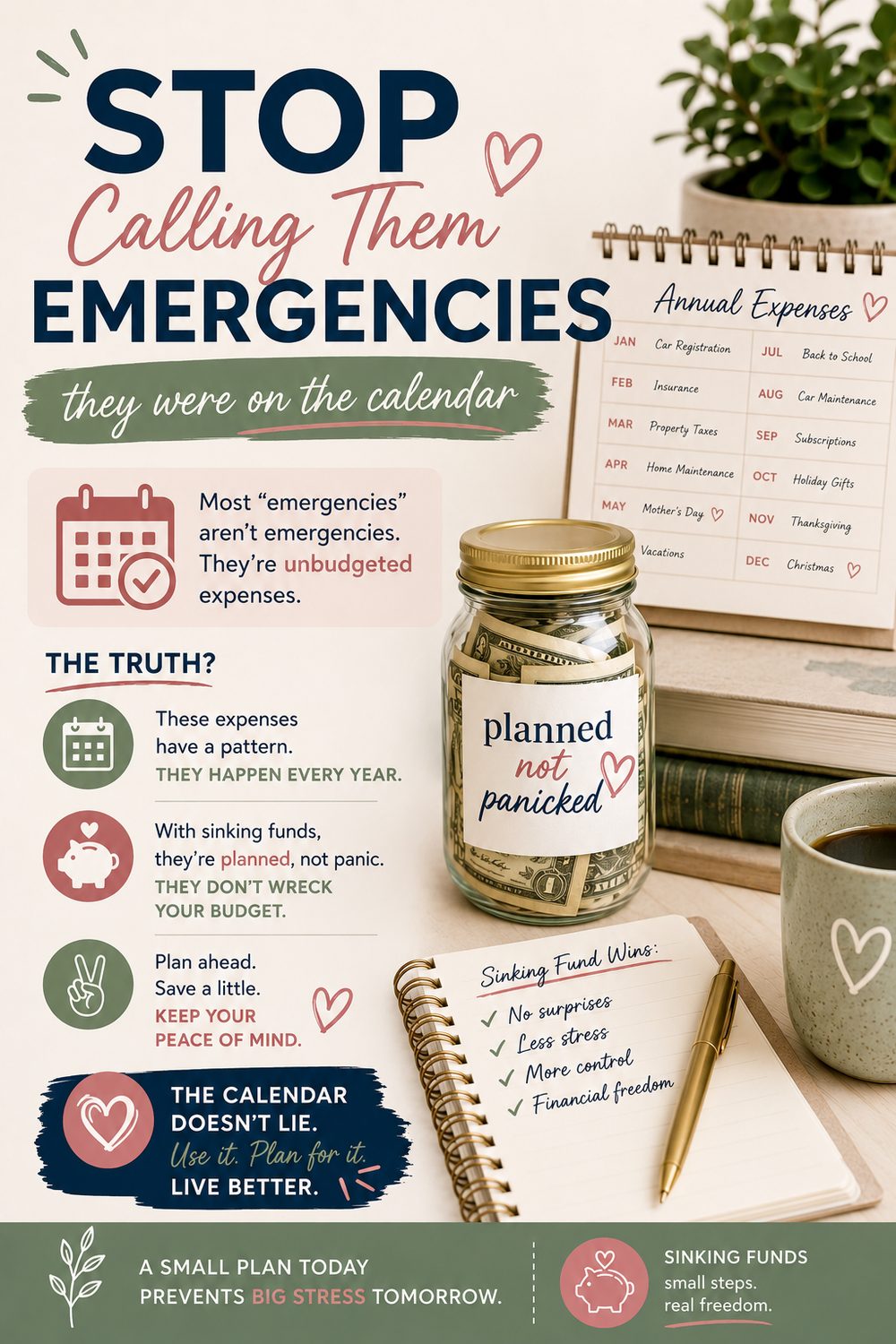
Car registration, school supplies, holiday travel, annual software, and routine vet care are not monthly bills, but they are not random either. They become budget emergencies when the bill arrives faster than the cash.
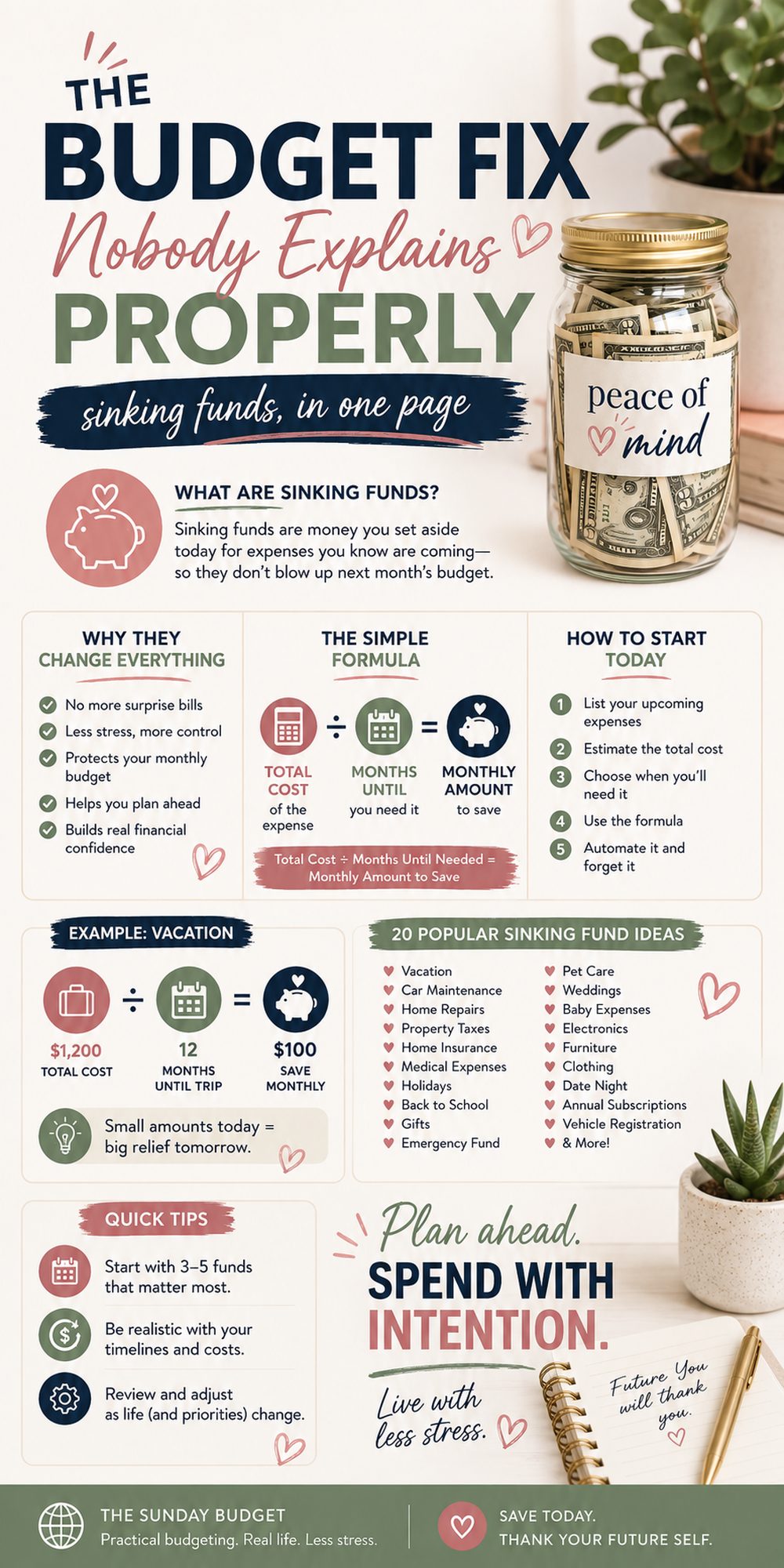
A sinking fund fixes that timing problem. You estimate a future expense, divide it into smaller deposits, and hold the money until the expense occurs. Instead of finding $600 in one month, you might save $50 for twelve months.
This guide shows how to calculate a sinking fund when you know the amount and date, what to do when both are uncertain, which categories deserve priority, and how to run the system without opening twenty bank accounts.
What is a sinking fund?
A sinking fund is money accumulated gradually for a specific future expense.
It has four parts:
- Purpose: what the money will pay for.
- Target: the amount you expect to need.
- Timeline: when you expect to spend it.
- Contribution: how much you will set aside each month or paycheck.
Examples include a $480 vehicle-registration bill due in eight months, $900 of expected car maintenance across a year, or $1,200 for holiday gifts and travel by December.
The money is meant to be spent. Using a fully funded car-maintenance category for new tires is not a setback; it is the plan working.
Sinking fund versus emergency fund
Both may sit in savings, but they solve different problems.
| Fund | Main job | Example | Expected to be spent? |
|---|---|---|---|
| Sinking fund | Prepare for a known or reasonably predictable expense | annual insurance premium, tires, gifts | Yes |
| Emergency fund | Absorb an urgent expense or income interruption you did not plan | job loss, urgent medical travel, major unexpected repair | Hopefully not often |
| General savings goal | Build toward an optional future purchase or milestone | house deposit, elective upgrade | Yes, if the goal remains important |
The boundary is not perfect. You may know a car will need repairs but not know the date or exact amount. That can still be a sinking fund because the category is predictable even when the invoice is not.
A useful test is:
- Can I name the category and estimate its frequency? Use a sinking fund.
- Would this happen outside my normal plan and require immediate action? Use the emergency fund.
Keeping the labels separate prevents annual bills from repeatedly draining the emergency fund.
The sinking fund formula
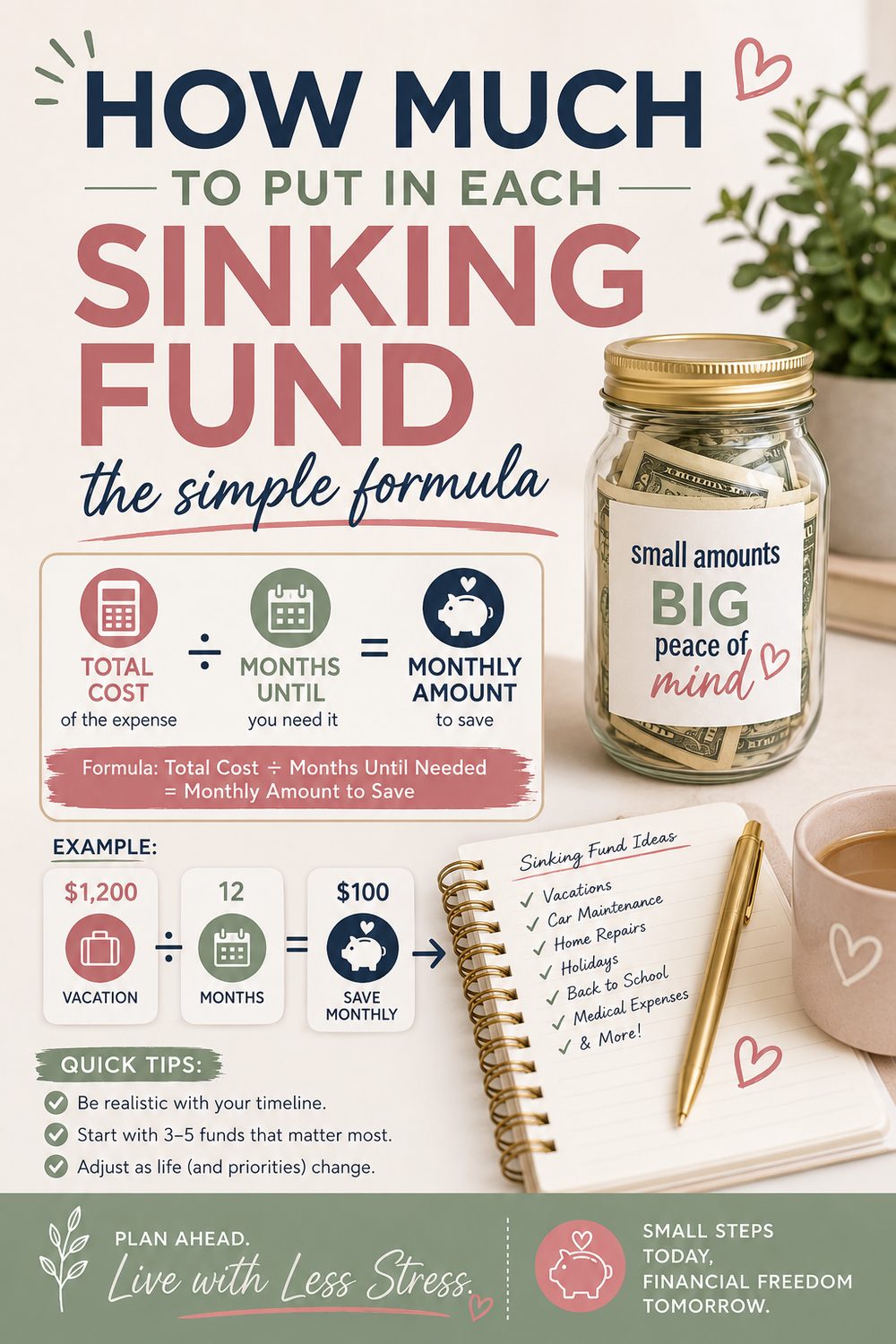
When the target and date are known, use:
Required contribution = (target amount − amount already saved) ÷ deposits remaining
“Deposits remaining” matters more than “months remaining.” A monthly saver, biweekly worker, and irregular freelancer may have different numbers of deposits before the same due date.
Example 1: a known bill and date
Suppose a $720 insurance premium is due in eight months, and the fund already contains $120.
| Calculation | Amount |
|---|---|
| Target | $720 |
| Already saved | −$120 |
| Still needed | $600 |
| Monthly deposits remaining | ÷ 8 |
| Required monthly contribution | $75 |
After eight $75 deposits, the fund reaches $720.
Example 2: starting late
Suppose the same $720 bill is four months away and nothing has been saved.
$720 ÷ 4 = $180 per month
The bill did not become more expensive; the runway became shorter. If $180 does not fit, the realistic choices are to reduce the target if possible, use existing savings intentionally, cut or pause a lower-priority goal, increase income, or ask the provider about available payment schedules. Pretending that $75 is still enough only creates a future shortfall.
Example 3: an expense with no exact date
For ongoing categories such as car maintenance, begin with the last twelve to twenty-four months of actual spending.
If maintenance and repairs totaled $900 last year:
$900 ÷ 12 = $75 per month
That is a starting estimate, not a guarantee. Adjust it for the vehicle's age, upcoming known work, warranty coverage, mileage, and whether last year was unusually high or low.
Example 4: saving by paycheck
If you need $500 and have ten paychecks before the due date:
$500 ÷ 10 = $50 per paycheck
Paycheck-based deposits are often easier than converting everything to a monthly average. A biweekly worker can also use the two three-paycheck months for catch-up contributions or future targets.
Count the deposits correctly
Date math creates avoidable errors. Before dividing, answer these questions:
- Is a deposit happening today?
- Will there be a deposit during the month the bill is due?
- Does the payment need to clear before payday?
- Is the bill date fixed or only estimated?
If a $600 payment is due on October 2 and the October paycheck arrives October 4, the October deposit cannot fund that bill. Count only deposits available before payment.
For uncertain timing, give yourself a margin. A target needed “before winter” should not depend on the final paycheck of the season.
How to find the sinking funds you actually need
Do not begin with a generic list. Reconstruct your own irregular spending first.
Review the last year
Check bank and card statements, receipts, email renewals, and calendar events. Look for costs that were necessary or predictable but did not occur every month.
Common clues include:
- a month that required a credit-card balance;
- a savings withdrawal you later had to rebuild;
- an annual charge you forgot to cancel or budget;
- a seasonal spending spike;
- a repair you know will happen again; or
- a cost attached to a scheduled event.
Look forward one year
Past statements will not show a new school, planned move, expiring warranty, major trip, or upcoming wedding. Add events already visible on the next twelve-month calendar.
Separate the target from the wish list
“Travel” is too vague to calculate. “Four-night family visit in November: $850” has an amount and date.
Useful fund names include:
- Car tires — March — $800
- School uniforms — August — $240
- Annual software renewals — January — $310
- Holiday travel — December — $600
Specific labels make it easier to decide whether a withdrawal matches the purpose.
How to prioritize sinking funds on a tight budget
The list of possible funds is unlimited; cash is not. Rank each proposed fund using three factors:
- Consequence: What happens if the money is missing?
- Timing: How soon is the expense likely or due?
- Flexibility: Can the amount, date, or purchase be changed?
Priority 1: obligations and essential access
Start with expenses where missing the payment risks a penalty, lapse, inability to work, or loss of an essential service.
Examples include required registration, an insurance premium, known tax payments, essential medication, or mandatory school costs.
Priority 2: protect income and essential assets
Next fund probable costs that keep the household functioning: vehicle maintenance for the car used to reach work, critical home maintenance, routine health care, and necessary pet care.
Priority 3: predictable but adjustable expenses
Gifts, celebrations, clothing, hobbies, travel, and upgrades still belong in the plan, but their dates or targets may be more flexible.
This is not a judgment about what matters emotionally. It is a sequence for deciding what receives limited cash first.
A realistic starter setup
Assume the budget can support $120 per month, but the first draft of desired funds requires $245.
| Proposed fund | Full monthly need | Priority decision | Starter contribution |
|---|---|---|---|
| Car maintenance | $75 | Essential transport | $60 |
| Annual bills | $50 | Fixed due dates | $30 |
| Holiday gifts | $45 | Target can shrink | $20 |
| Medical and dental | $35 | Keep a small base | $10 |
| Travel | $40 | Pause temporarily | $0 |
| Total | $245 | $120 |
The starter plan does not pretend every target is fully funded. It protects the highest-consequence categories, reduces flexible goals, and documents the remaining gap.
When an annual bill is paid or income improves, redirect that contribution instead of letting it disappear. This is the sinking-fund version of a debt-payment rollover.
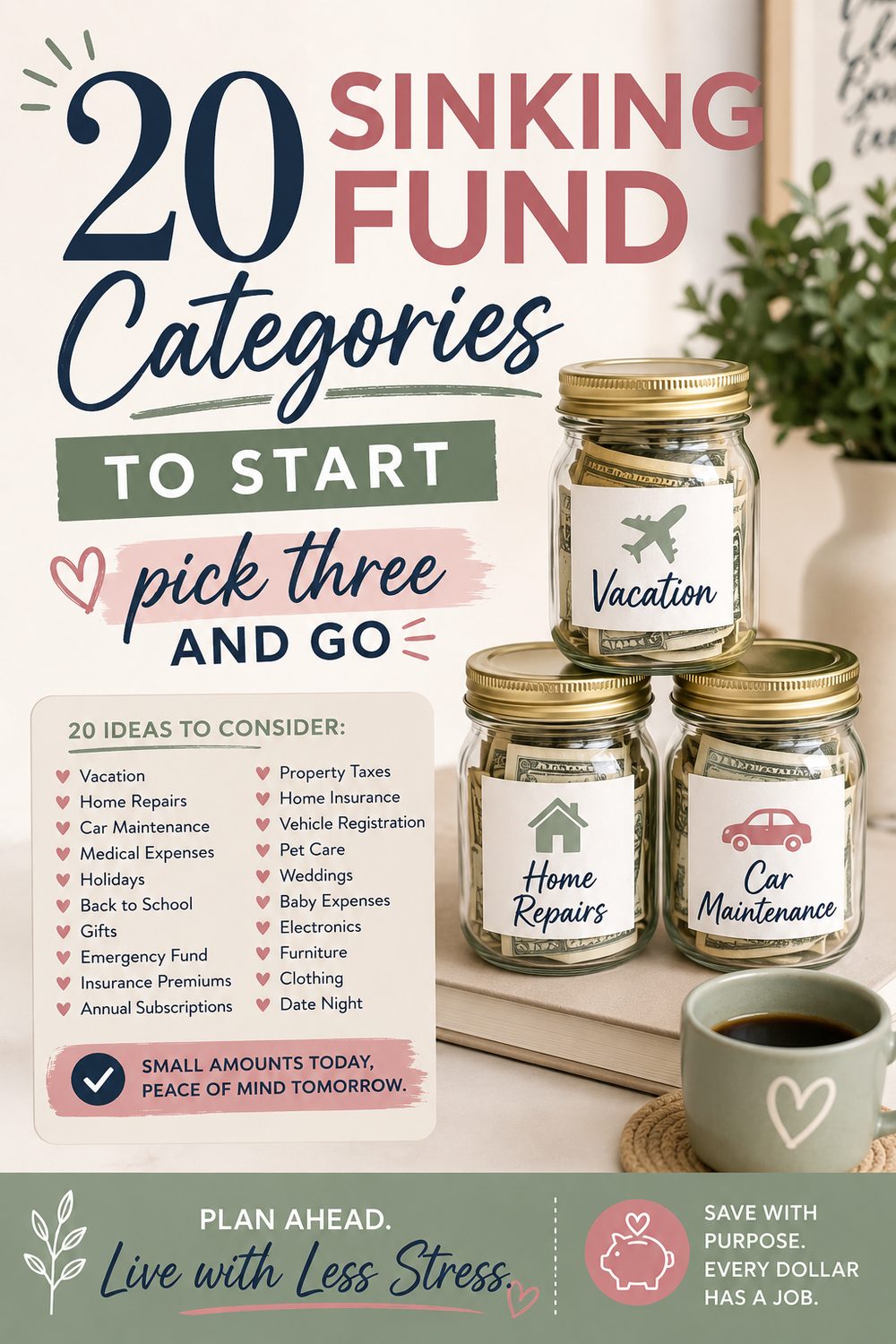
20 sinking fund categories to consider
Use these as prompts, not requirements. Start with the categories supported by your statements, calendar, and household risks.
Required and date-driven costs
- Insurance premiums: annual or semiannual auto, renters, homeowners, or other premiums.
- Vehicle registration and inspection: renewal charges, inspection, emissions testing, and related fees.
- Taxes: expected payments not covered by withholding, including qualifying self-employment or other non-wage income obligations.
- Annual subscriptions and memberships: software, professional dues, domains, storage, and memberships you intentionally keep.
- School costs: fees, uniforms, supplies, devices, activity charges, and required trips.
Tax money deserves extra care. In the United States, people with self-employment or other income without sufficient withholding may need estimated payments during the year. Use the current IRS estimated-tax guidance or a qualified tax professional to determine the amount and timing; do not guess a universal percentage from social media.
Protecting the household
- Car maintenance and repairs: oil, tires, brakes, scheduled service, deductible, and age-related repairs.
- Home maintenance and repairs: servicing, filters, minor repairs, appliance replacement, and an insurance deductible.
- Medical and dental: deductibles, copays, glasses, prescriptions, planned dental work, and travel for care.
- Pet care: routine visits, vaccinations, medication, grooming required for health, and an emergency-vet buffer.
- Technology replacement: a necessary phone, computer, battery, or device used for work or school.
Family and seasonal spending
- Holiday gifts: a recipient list, per-person limit, wrapping, and shipping.
- Holiday food and travel: hosting, transport, lodging, special meals, and decorations kept separate from gifts.
- Birthdays and celebrations: gifts, meals, venue costs, and supplies across the full year.
- Clothing and shoes: seasonal needs, growing children, uniforms, workwear, and planned replacements.
- Kids' activities: registration, equipment, uniforms, lessons, competition fees, and travel.
Optional goals and future upgrades
- Travel: transport, accommodation, food, activities, insurance, and a return-home buffer.
- Weddings and events: clothing, gifts, travel, accommodation, and participation costs.
- Furniture and appliances: replacements based on condition and expected useful life.
- Hobbies and equipment: planned purchases, maintenance, classes, and consumable supplies.
- Next vehicle: deposit or cash-purchase target, taxes, registration, and an initial maintenance reserve.
Giving can also be its own fund when you want a planned amount available for community needs, mutual aid, or seasonal donations.
How many sinking funds should you have?
There is no correct number. The practical limit is the number you can fund and review without losing track.
For a first setup:
- choose three to five categories;
- include at least one near-term fixed bill;
- include one category that has previously caused debt or an emergency-fund withdrawal; and
- pause low-priority categories rather than depositing amounts too small to change the outcome.
You may track twelve categories while actively funding only five. A target can remain visible with a $0 current contribution until higher priorities are stable.
Where to keep sinking funds
The right location should protect principal, remain accessible before the bill, and make categories easy to track.
Option 1: one savings account with buckets
Some banks and credit unions let one savings account contain named subcategories. This provides separation without managing multiple account numbers.
Check whether the bucket labels are only a display feature and whether payments draw from the combined account balance. Your tracker should still record each category's available amount.
Option 2: one savings account plus a tracker
Hold all sinking-fund cash in one account and maintain category balances in a spreadsheet or budgeting app.
If the bank balance is $1,800, your tracker might show:
| Category | Available |
|---|---|
| Car | $650 |
| Annual bills | $500 |
| Medical | $250 |
| Holidays | $400 |
| Account total | $1,800 |
Reconcile the tracker total to the bank balance during the monthly review.
Option 3: a small number of separate savings accounts
Separate accounts may help when one fund is large, legally important, or easy to confuse with spending money. For example, tax money may warrant its own account.
Before opening accounts, check minimum balances, maintenance fees, transfer limits, withdrawal timing, and account-closing terms.
Keep short-term money boring
Money needed within the next few years generally should not depend on a volatile investment being up on the payment date. Sinking funds prioritize availability and principal stability over maximum possible return.
At a U.S. bank, confirm the institution and account type qualify for FDIC deposit insurance. At a federally insured credit union, review NCUA share-insurance coverage. Standard coverage is generally $250,000 per depositor or member, per insured institution, per ownership category, but aggregation and ownership rules matter. Deposit insurance protects eligible deposits if the institution fails; it does not make investments loss-free.
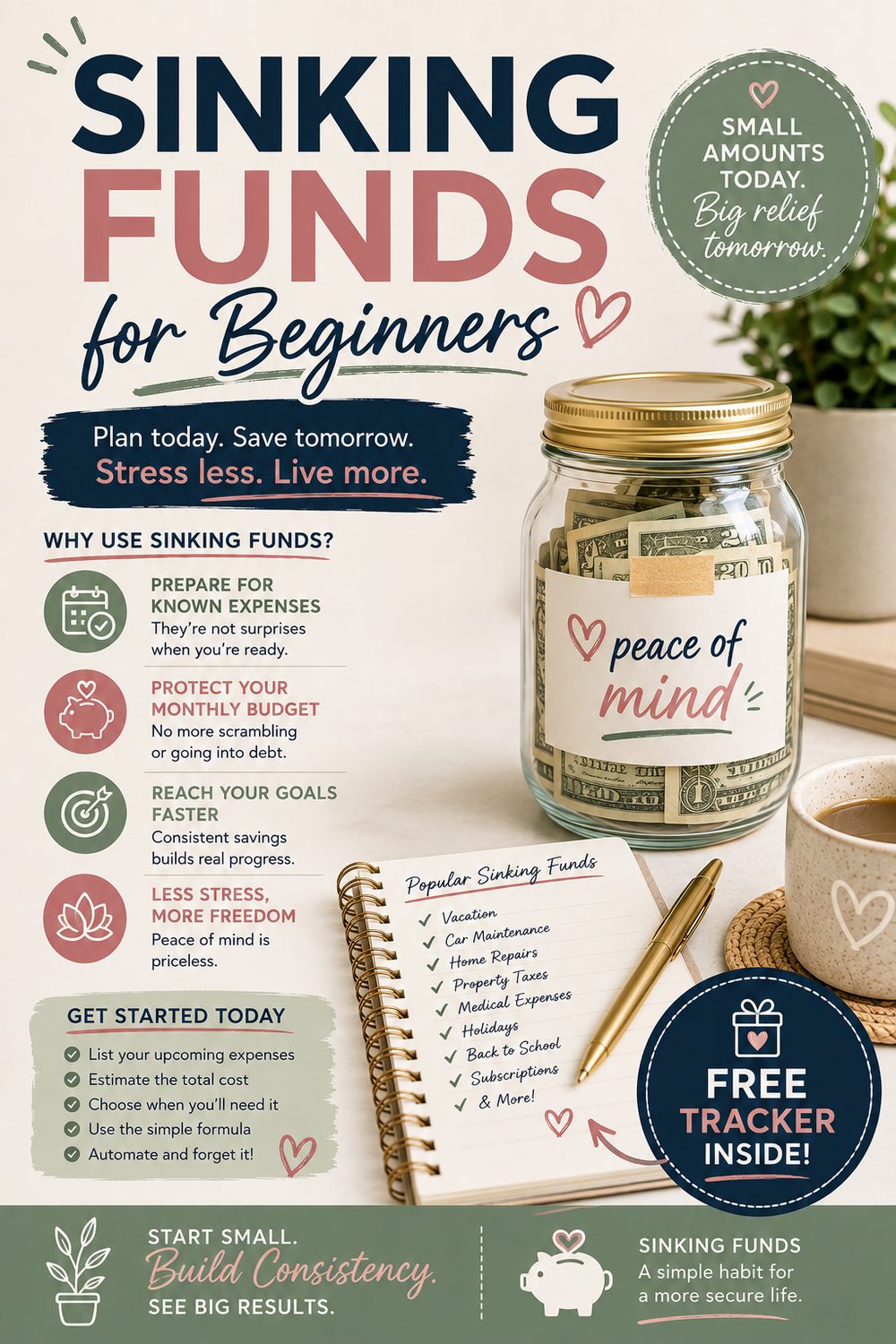
How to set up sinking funds step by step
Step 1: list the expense, target, and date
Use statements and the next twelve-month calendar. Do not estimate contributions yet.
Step 2: record the amount already saved
Assign existing cash only once. The same $500 cannot simultaneously belong to car repairs, gifts, and the emergency fund.
Step 3: calculate the required deposit
Use the target formula for dated expenses and a twelve-month average for recurring uncertain expenses. If paid by paycheck, divide by paychecks remaining.
Step 4: compare the total with the budget
Add all required contributions. If the total does not fit, prioritize openly. Change targets or timelines instead of allowing the checking account to absorb an invisible gap.
Step 5: choose the storage and tracking system
Decide whether one account with a spreadsheet, bank buckets, or a few separate accounts will be easiest to reconcile.
Step 6: automate after testing the plan
The Consumer Financial Protection Bureau recommends setting a goal, testing the plan, and then saving automatically. Schedule transfers just after income arrives, leaving enough in checking for bills that clear first.
With irregular income, use a two-part rule:
- a small minimum contribution in low-income periods; and
- a defined percentage or amount from income above the monthly baseline.
The rule should be based on the actual budget, not an arbitrary percentage.
Step 7: review monthly and after every withdrawal
Compare:
- tracker total versus bank balance;
- target versus current balance;
- deposits planned versus deposits made;
- months or paychecks remaining; and
- new information about cost or timing.
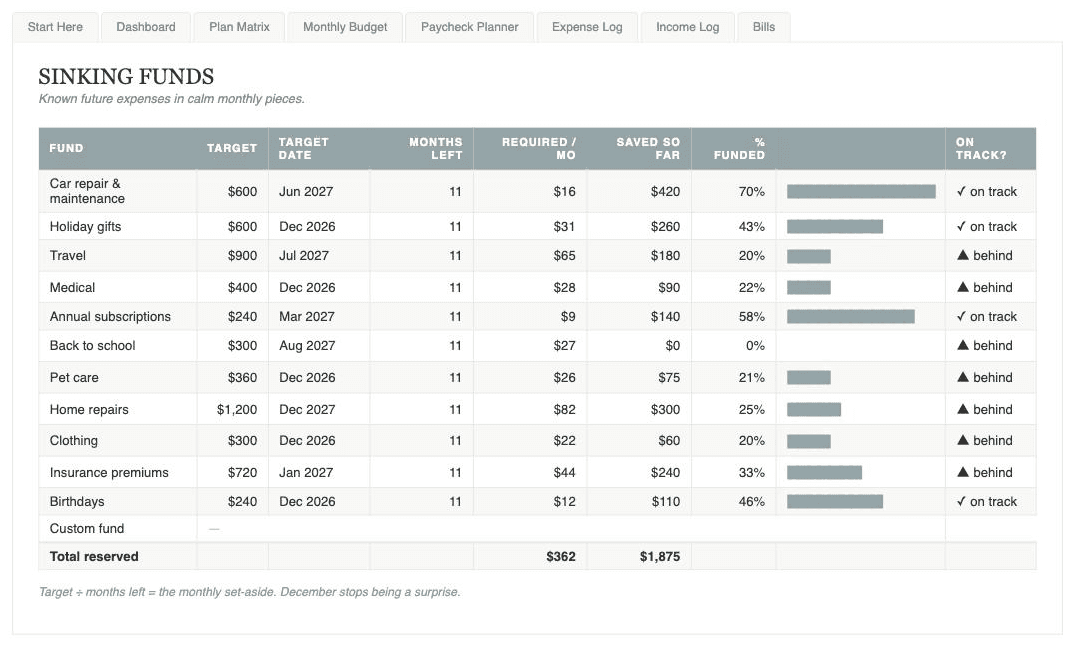
The free Sunday Budget planner includes a Sinking Funds tab for recording targets, dates, current balances, contributions, and progress. The spreadsheet organizes the plan; the bank or credit union remains the source of truth for cash actually held.
How withdrawals and refills should work
When the planned expense happens:
- Confirm the purchase belongs to the fund.
- Record the withdrawal in the tracker.
- Pay from checking or the appropriate payment method.
- Transfer the matching amount from savings if needed.
- Decide whether the fund ends, resets, or receives a new target.
A registration fund usually resets for next year. A one-time wedding-travel fund may close. A car-maintenance fund normally continues because another cost will occur.
If a credit card is used for convenience or consumer protections, do not treat the fund balance as permission to carry the charge. Move the corresponding cash and pay the card according to the billing schedule.
What to do when the fund is too small
An underfunded category is information, not a reason to hide the bill.
Recalculate immediately
Update the target, balance, and deposits remaining. Determine the exact shortfall.
Reduce the expense where possible
Compare quotes, narrow the gift list, adjust travel, remove optional features, or choose a lower-cost replacement. Do not cut required coverage or essential care without understanding the consequences.
Reallocate from a lower-priority fund
Moving vacation cash to urgent car repairs can be a deliberate priority change. Record the transfer between categories so the tracker still equals the bank.
Protect the emergency fund for genuine emergencies
If a necessary expense is urgent and the sinking fund is insufficient, using emergency savings may be appropriate. Afterward, update the sinking-fund estimate if the cost is likely to recur.
Sinking funds while paying off debt
Sinking funds and extra debt payments compete for the same dollars, but eliminating every sinking fund can create replacement debt.
A practical sequence is:
- Stay current on required payments and essential expenses.
- Build a modest emergency buffer appropriate to the household.
- Fund near-term required and high-probability expenses.
- Direct the remaining extra money using a debt snowball or debt avalanche.
Keep optional funds small or paused during an aggressive payoff. The goal is not to pre-fund every possible purchase; it is to prevent predictable costs from undoing the debt plan.
Where sinking funds fit in a budget rule
A sinking-fund transfer is not automatically “savings” for purposes of a framework such as the 50/30/20 rule. Classify the underlying expense.
- Car registration may belong with needs.
- Holiday gifts may belong with wants.
- A future vehicle purchase may be a savings goal.
The bank account tells you where the cash sits. The category tells you what the money is for. Mixing those two ideas can make a budget appear to save more than it really does.
Common sinking fund mistakes
Starting too many funds
Twenty categories receiving $3 each may produce activity without adequate protection. Fund the most consequential targets first.
Ignoring current balances
The formula uses the amount still needed, not the original target. Recalculate after deposits, withdrawals, refunds, or target changes.
Counting money twice
A combined savings balance needs category-level records. Otherwise the same cash may appear available for several purposes.
Using averages for fixed dated bills
Annual cost ÷ 12 works only when you have twelve months. If the bill is five months away, divide by five deposits, not twelve.
Forgetting the full cost
Travel includes ground transport and food. A vehicle purchase includes taxes, registration, inspection, and initial maintenance. Gifts may include shipping. Define what the target covers.
Treating every withdrawal as failure
A sinking fund should decrease when the expense occurs. Judge the system by whether the planned cash was available, not by whether the graph always rises.
Never updating the estimate
Costs, schedules, and priorities change. Review recurring targets after each use and dated targets monthly as the deadline approaches.
Frequently asked questions
How much should I put in sinking funds each month?
Add the calculated contribution for each active fund. There is no responsible universal dollar amount or percentage. If the total exceeds available cash, rank the funds by consequence, timing, and flexibility, then change lower-priority targets.
Should sinking funds be included in the monthly budget?
Yes. Treat each contribution as an assignment of current income. The transfer may leave checking, but the category is not an expense until the money is used for its intended purpose.
Do I need a separate account for every fund?
No. One insured savings account plus an accurate category tracker can work. Buckets or a few separate accounts may improve clarity, but more accounts also create more statements, rules, and reconciliation work.
Should a sinking fund earn interest?
Interest is useful, but access, fees, insurance eligibility, and reliable tracking matter more for near-term obligations. Treat interest as a small contribution to the target and record it so the tracker still matches the account.
What happens to money left over?
Keep it for the next cycle, lower the next contribution, or reassign it to another category. Record the decision. Do not let unassigned leftovers make the tracker differ from the bank balance.
What if the price increases before the due date?
Update the target and divide the new remaining amount by deposits left. If the revised contribution does not fit, reduce a flexible feature, extend the date where possible, or reallocate from a lower-priority goal.
Can cash envelopes be used for sinking funds?
They can work for small, near-term cash purchases, but physical cash carries theft, loss, and recordkeeping risks and does not earn interest. Larger or distant targets are usually easier to protect and reconcile in an appropriate insured deposit account.
Start with three funds this week
Choose one fixed annual bill, one expense that has previously caused debt, and one flexible quality-of-life goal.
For each, write:
- target amount;
- current balance;
- due date or expected frequency;
- deposits remaining;
- required contribution; and
- where the money will be held.
Add the three contributions to the next budget. If they do not fit, prioritize before automating. A useful sinking-fund plan is not the one with the most categories; it is the one that puts enough cash behind the expenses most likely to disrupt your month.

Written by
I fixed my own money with a spreadsheet and a Sunday morning, and now I build the tools I wish I’d had. I manage a dental practice in Greensboro, North Carolina, and I have never once told anyone their problem was the coffee.