Cash Envelope System for Beginners (+ Best Categories)
By Nora Bennett · July 14, 2026
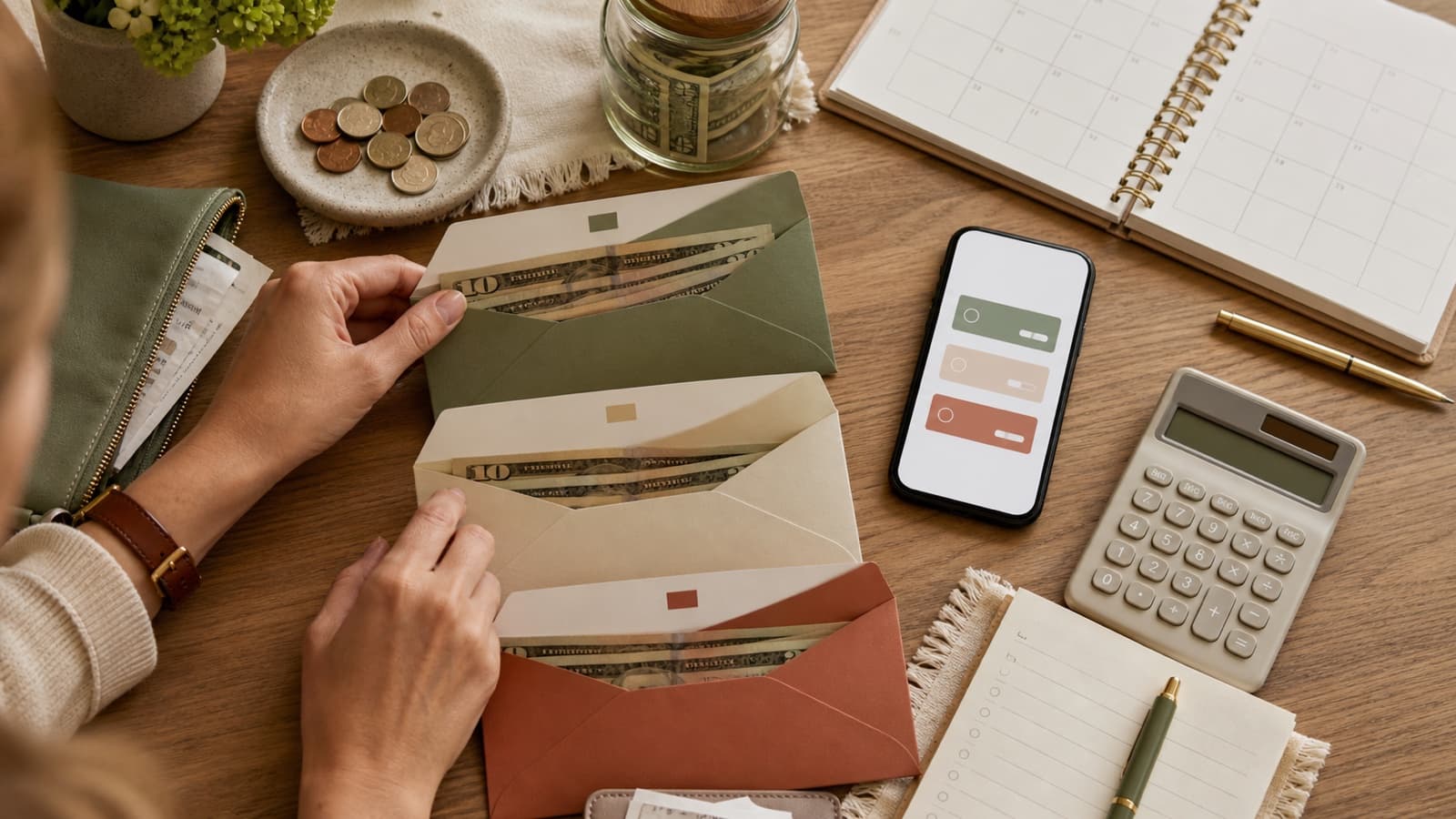
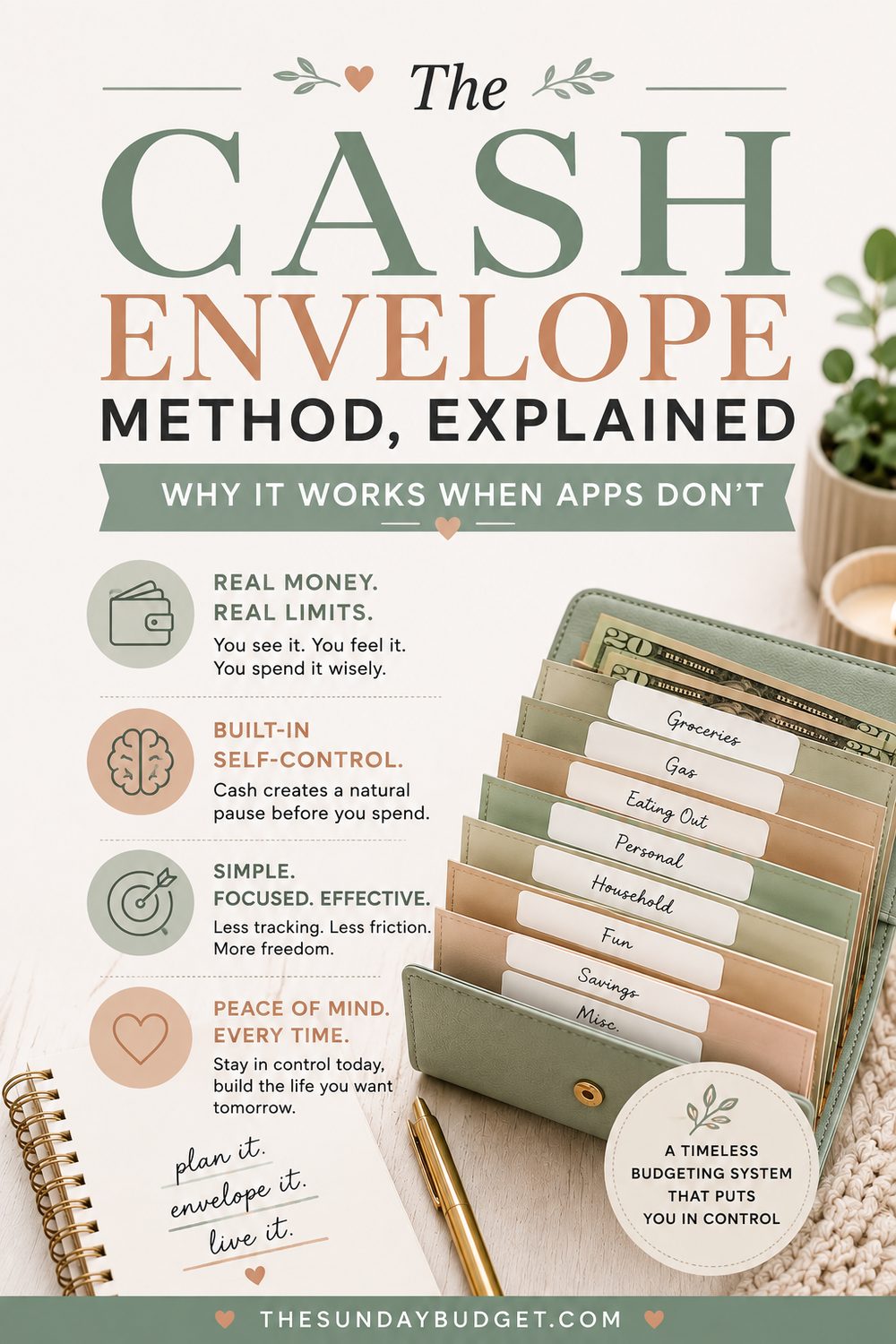
The cash envelope system gives selected spending categories a visible limit. Put a planned amount into an envelope labeled Groceries, Eating Out, or Fun. Spend from that envelope. When the envelope is empty, pause that category until the refill date or move money from another category deliberately.
That last word matters. The system does not make overspending impossible, and it does not replace a complete budget. Its value is that the remaining amount becomes visible before a purchase instead of after the statement arrives.
You also do not need to carry an entire monthly budget in cash. Most beginners should keep housing, bills, debt payments, savings, and online obligations in the bank. Use physical or digital envelopes only for the variable categories where a clearer boundary would help.
How the cash envelope system works
The method has four parts:
- Set a realistic category amount. Use recent spending and available income.
- Fund it on a schedule. Refill after income arrives, not whenever the envelope becomes empty.
- Check the remainder before buying. The envelope answers what is safe to spend in that category.
- Review and adjust. Running out may indicate overspending, an unrealistic amount, a price change, or a missing category.
An empty envelope is information—not proof that the user lacks discipline. The next step depends on why it emptied.
Is “cash stuffing” on TikTok and Instagram the same thing?
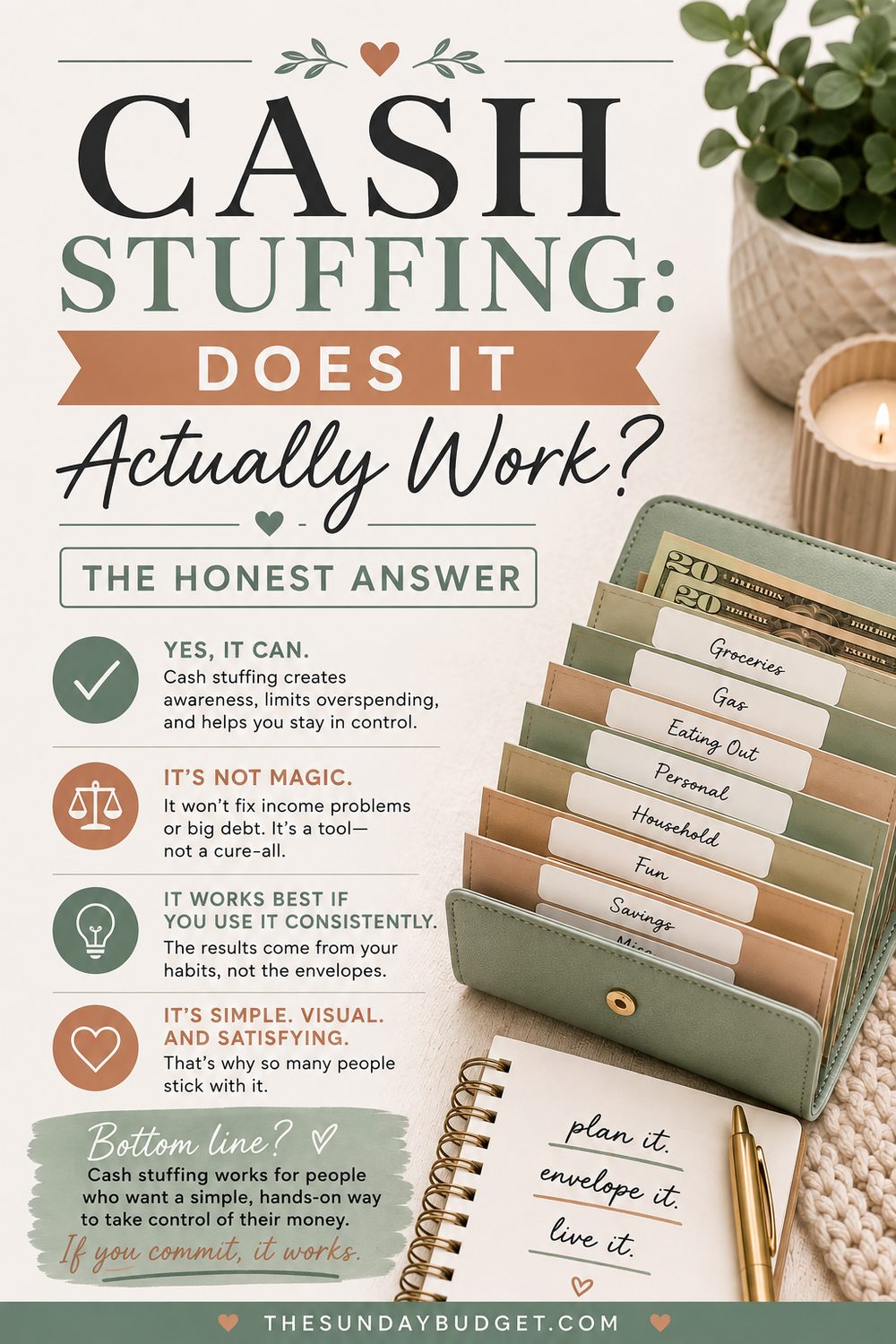
Yes. The videos commonly called cash stuffing are a camera-friendly version of the cash envelope method. Creators count a paycheck, place bills into labeled zipper pouches or binders, update trackers, and sometimes add money to sinking funds or savings challenges.
The visual routine can make budgeting feel concrete and motivating. But the binder, matching envelopes, cash tray, calculator, and decorative labels are optional. A few plain envelopes can apply the same method for almost no cost.
This TikTok example shows the basic idea in a beginner-friendly format:
Cash Stuffing: A Beginner's Guide to Budgeting
This third-party post stays blocked until you choose to load it. Loading it may allow TikTok to set cookies or collect usage data.
This Instagram example from The Budget Mom explains how the envelope method works in practice:
How the Cash Envelope Method Works
This third-party post stays blocked until you choose to load it. Loading it may allow Instagram to set cookies or collect usage data.
What social videos often combine
Cash-stuffing videos may place three different jobs in the same binder:
- Spending envelopes hold money expected to be spent before the next refill, such as restaurants or personal spending.
- Sinking funds build gradually for known future costs, such as car repairs, annual fees, or gifts.
- Savings challenges use prompts or games to make saving more engaging, but they should come after required bills and essential needs.
Keeping those jobs separate prevents a common mistake: treating every attractive pouch as another category that needs funding.
Four rules before copying a creator's setup
- Copy the process, not the numbers. A creator's income, currency, household size, prices, debts, and goals may be completely different from yours.
- Do not withdraw protected money for the video-friendly look. Keep rent, utilities, minimum debt payments, emergency savings, and other required funds secure and available for their due dates.
- Do not turn budgeting supplies into a new spending problem. Test the method with ordinary envelopes before buying a binder or accessories.
- Protect your privacy and safety. Avoid showing your address, bank details, withdrawal location, regular cash schedule, or the total cash stored at home.
Embedded posts remain the property of their creators and platforms. They are examples of the method, not guarantees that cash stuffing will work for every household.
Who benefits most from envelopes?
The system is worth testing when:
- card spending feels disconnected from category limits;
- one or two variable categories repeatedly exceed the plan;
- seeing a physical remainder makes decisions easier;
- cash is accepted for most purchases in the selected category;
- the household wants a short-term spending reset; or
- a simple system is more likely to be maintained than a detailed app.
It may be a poor fit when:
- carrying cash creates a safety concern;
- most necessary purchases happen online;
- disability or access needs make cash handling difficult;
- the household needs synchronized spending across several people;
- rewards, purchase protection, or detailed electronic records are important; or
- local businesses rarely accept cash.
In those cases, use digital envelopes or a hybrid system rather than forcing paper money into every transaction.
Start with spending history, not a round number
Before setting envelope amounts, track at least two weeks of spending; a full month is better when possible. The CFPB's spending tracker recommends recording receipts and categorizing spending so changes are based on the household's actual pattern.
For each possible envelope category, record:
- the amount spent;
- the number of purchases;
- whether the purchases were necessary, planned, or impulsive;
- which purchases still felt worthwhile afterward; and
- whether cash would have been practical.
Do not set groceries at $300 merely because that number looks tidy if recent necessary grocery spending is $550. Start near reality, then pair a modest reduction with a specific action such as meal planning or reducing waste.
The best cash envelope categories
Choose categories that are variable, purchased frequently, and easy to pause or adjust.
| Category | Why it can work | Watch for |
|---|---|---|
| Groceries | Frequent purchases and clear running limit | Do not make the amount nutritionally unrealistic |
| Restaurants and takeout | Easy to separate from groceries | Delivery and online orders need a digital rule |
| Personal fun money | Creates a guilt-free personal boundary | Give partners separate amounts when appropriate |
| Clothing and household shopping | Slows impulse purchases | Planned replacements may need a sinking fund instead |
| Hobbies and entertainment | Makes optional spending visible | Do not include required work or school supplies |
| Beauty and personal care | Separates routine from optional upgrades | Prescribed or medically necessary items stay protected |
| Coffee and treats | Useful for a short behavior experiment | Keep planned pleasures if they fit the budget |
| Kids' discretionary spending | Contains small repeated requests | Do not mix essentials, school needs, or medical costs into it |
| Pet extras | Useful for toys and optional treats | Food, medicine, and veterinary care need protected categories |
| Small miscellaneous spending | Catches low-value purchases | Keep it small and review what uses it |
Categories that usually should not become cash envelopes
Keep these in an account or another secure system unless you have a specific reason and safe process:
- rent or mortgage;
- utilities and phone bills;
- insurance;
- minimum debt payments;
- subscriptions and automatic payments;
- emergency savings;
- retirement contributions;
- taxes;
- large medical payments;
- travel reservations; and
- purchases where card dispute protections matter.
Cash intended for a due-date obligation can be spent, lost, or stolen before payment. Leave required money where it can complete its job.
Begin with one to three categories
A beginner does not need an accordion wallet containing the whole household budget. Start with the category creating the most frequent regret or confusion.
A practical first test might be:
- Restaurants and takeout
- Personal fun money
- Unplanned household shopping
Groceries can be added later if cash is practical and the amount is based on real food needs. Starting with too many envelopes creates counting, receipt, and refill work before the method proves useful.
Calculate each envelope amount
Step 1: Find the realistic monthly baseline
Average the last two or three ordinary months. Remove unusual purchases that belong in sinking funds, but do not remove normal high weeks merely to lower the result.
Example:
- Month 1 restaurants: $178
- Month 2 restaurants: $142
- Month 3 restaurants: $160
- Average: $160
If the goal is a modest reduction, the first envelope might be $140 or $150—not $50.
Step 2: Confirm the total budget supports it
Envelope amounts come after reliable income, housing, essential utilities, food, transport, insurance, minimum payments, and other required obligations are considered.
If the complete budget is negative, moving the same spending into envelopes will not solve the income-expense gap. Use the low-income budgeting guide to prioritize essentials and address the structural shortfall.
Step 3: Convert the monthly amount to the refill schedule
For a monthly target:
- Twice monthly: monthly amount ÷ 2
- Biweekly: annualized monthly amount ÷ 26, or use a paycheck plan that treats two-paycheck and three-paycheck months separately
- Weekly: monthly amount × 12 ÷ 52
Example: a $520 monthly grocery plan is approximately $120 a week: $520 × 12 ÷ 52.
Do not divide a monthly amount by four and assume every month has exactly four weeks. That shortcut underfunds longer months.
A complete worked example
Suppose a household receives two $1,850 paychecks per month. After required bills, savings, and protected essentials, it chooses four variable envelopes:
| Envelope | Monthly plan | Refill after each paycheck |
|---|---|---|
| Groceries | $600 | $300 |
| Restaurants | $140 | $70 |
| Personal fun | $100 | $50 |
| Household extras | $80 | $40 |
| Total envelopes | $920 | $460 |
The household does not withdraw $3,700. It withdraws $460 after each paycheck for the four selected categories. Everything else remains assigned digitally.
If the second paycheck must cover more bills, equal envelope refills may create a cash-flow problem. The amounts can be split differently—for example, $540 after the first paycheck and $380 after the second—provided the full month still totals $920.
The CFPB's cash-flow budget tool emphasizes timing income and expenses week by week. Envelope funding should follow the same logic.
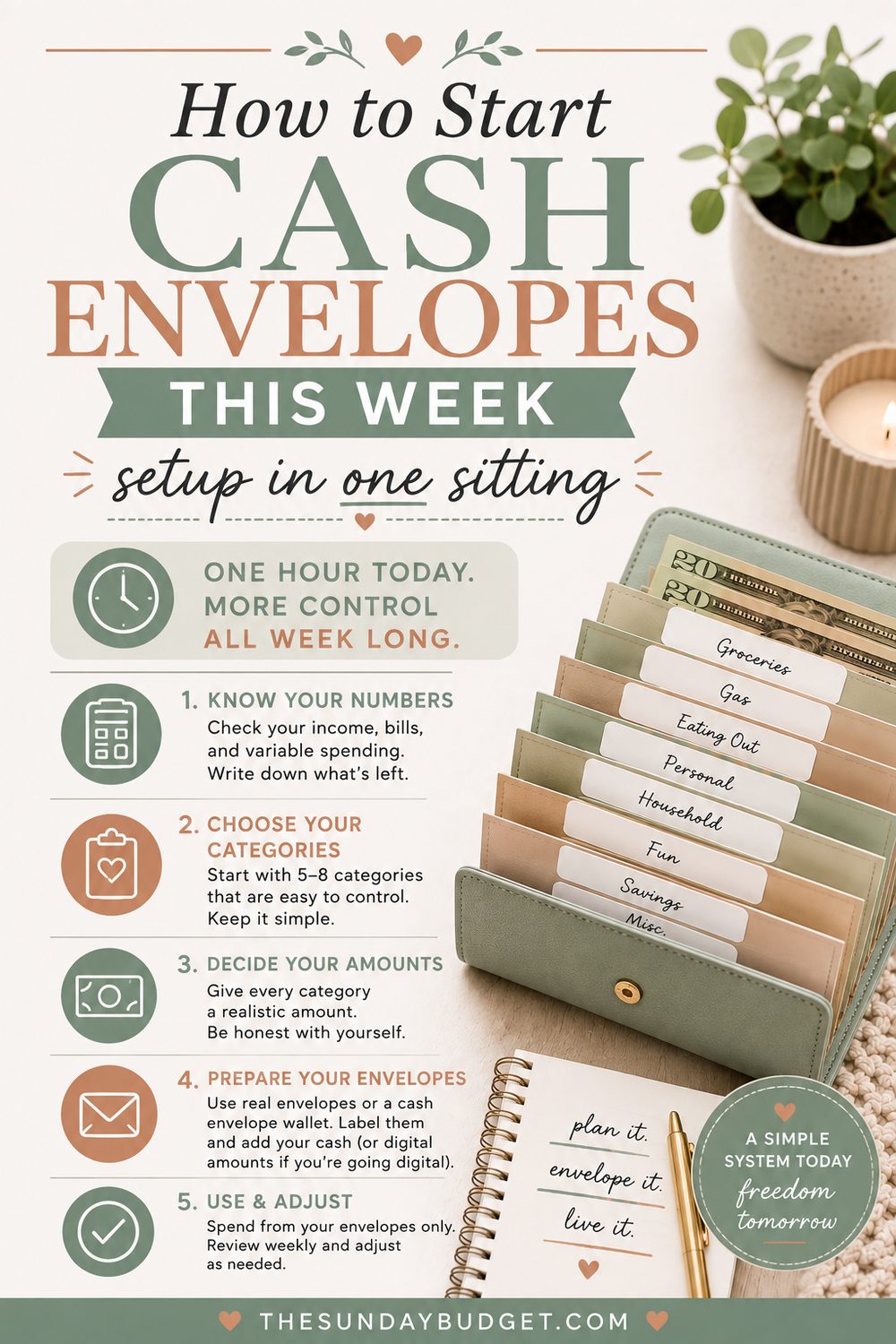
Set up physical envelopes step by step
1. Choose secure, ordinary containers
Plain envelopes, a divided wallet, zipper pouches, or clips can work. Avoid displaying category names or amounts on the outside of a wallet that could be lost or stolen. A code, color, or small interior label may provide enough distinction.
2. Choose useful denominations
Think about normal purchase size. A restaurant envelope funded only with large bills is inconvenient. Groceries may need larger notes; small personal categories may need smaller ones.
Avoid withdrawing more frequently merely to obtain exact denominations if doing so creates ATM fees or unnecessary trips. Change can remain in the envelope.
3. Write the starting amount and refill date
Inside each envelope, record:
- category;
- starting amount;
- refill date; and
- optional transaction notes.
The record helps if bills move between envelopes or cash is removed for an online purchase.
4. Fund envelopes only after income clears
Do not withdraw money based on an expected deposit that has not arrived. Check pending bills and automatic payments first so the withdrawal does not cause an overdraft.
5. Carry only what you expect to use
Leave the rest in a secure location or withdraw weekly instead of monthly. Do not advertise cash, count large amounts in public, or leave an envelope visible in a vehicle.
The six rules that keep the system accurate
Rule 1: Refill on schedule, not when empty
An envelope does not receive extra money simply because it ran out early. Wait until the planned refill unless the household deliberately moves money from another category.
Otherwise, the envelope is only a cash wallet—not a spending limit.
Rule 2: Moving money is allowed, but record it
Budgets need flexibility. If groceries require another $25, you may move $25 from restaurants or shopping. Physically move the cash and record both sides.
Never take money from rent, required bills, medicine, minimum payments, or another protected category to preserve optional spending.
Rule 3: Return change to the correct envelope
Mixing change in a general pocket makes the remaining amounts inaccurate. Put coins and bills back into the original category or record a deliberate transfer.
If coins become burdensome, choose a consistent process: keep them in the envelope, deposit them periodically and credit the category, or count them toward a named savings goal.
Rule 4: Keep receipts until the weekly review
Receipts resolve memory gaps and help identify prices, returns, and mixed-category purchases. Put them in the category envelope or one receipt pouch.
At the review, record the purchase if desired, confirm the cash remainder, then store or discard the receipt according to its return, warranty, tax, or reimbursement importance.
Rule 5: Split mixed purchases immediately
A single store receipt may include groceries, medicine, household supplies, and personal items. Pay from more than one envelope if practical, or pay from one and reimburse it from the correct envelopes at home.
Do not call the entire purchase “groceries” because it happened in a grocery store.
Rule 6: Decide what happens to leftovers
At refill time, choose one consistent rule:
- roll leftover cash into the same envelope;
- move it to a sinking fund or savings goal;
- use part for the next refill and transfer the difference; or
- allow limited rollover up to a category cap.
Rollover works well for categories with uneven timing. Sweeping leftovers can motivate short-term challenges. Neither rule is universally better.
How to handle online and card purchases
Cash envelopes need a bridge for online orders, delivery apps, fuel pumps, transit, reservations, and merchants that do not accept cash.
Choose one method and use it consistently.
Method 1: Remove the cash immediately
Pay by card, then remove the purchase amount from the active envelope and place it in a separate Card Purchases pouch. Deposit that cash back into the account before the card or account needs payment.
This preserves the category remainder, but frequent cash deposits may be inconvenient.
Method 2: Maintain a written digital deduction
Pay by card and write the amount on the envelope ledger. Subtract it from the envelope total even though the physical cash stays elsewhere. At refill, withdraw only the net amount required.
This avoids redepositing cash but requires accurate notes.
Method 3: Make that category fully digital
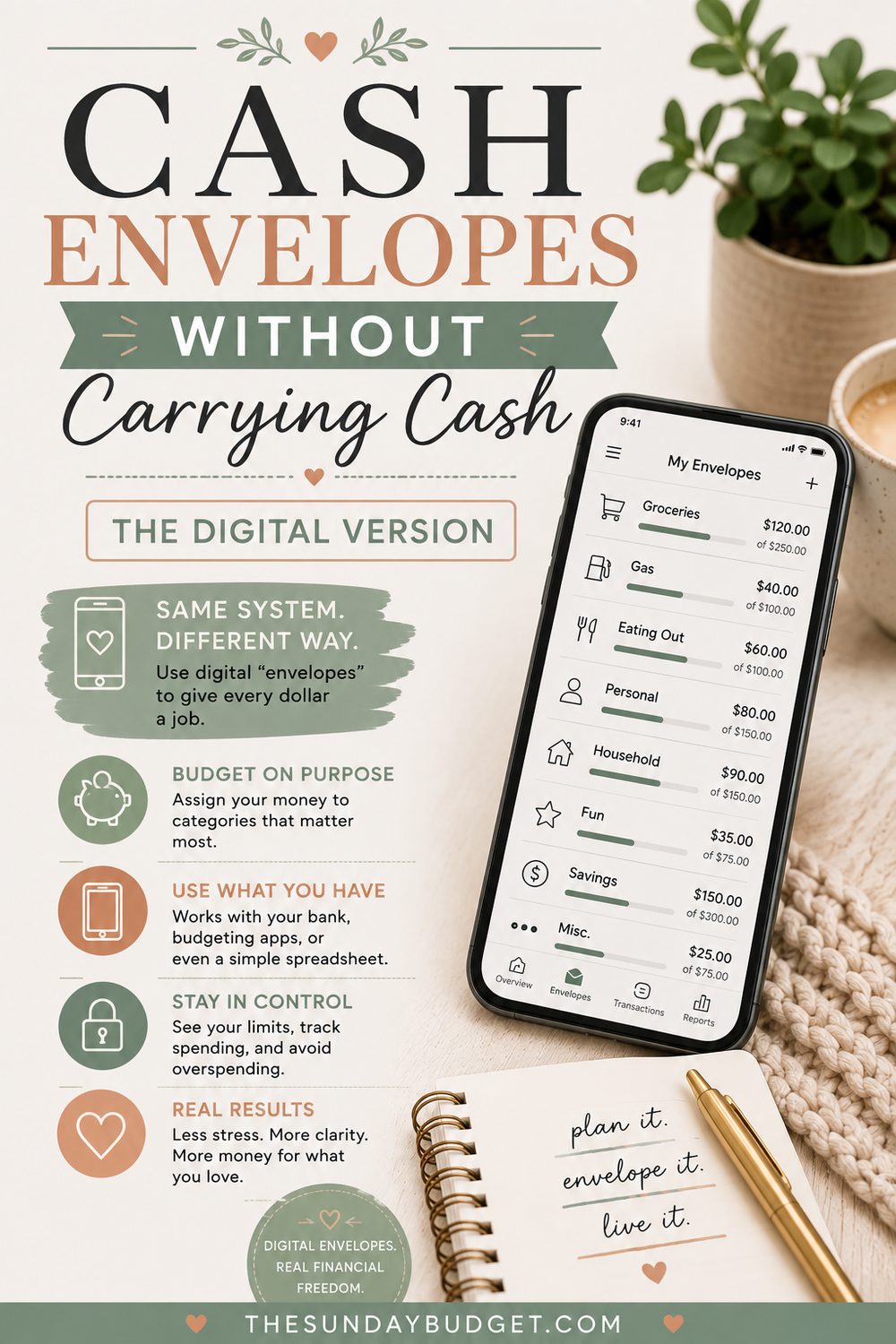
If most purchases in a category happen online, track planned, spent, and remaining amounts digitally. Use physical cash only for categories where it creates useful friction.
For online purchases, payment methods have different fees and legal protections. The FTC's payment-card comparison explains that credit and debit protections differ. Choose based on the purchase and your ability to avoid interest or fees—not because an envelope article declares one method best.
Cash safety and loss prevention
Cash generally cannot be frozen, replaced, or disputed after loss or theft. Cards may provide protections when reported promptly, though the rules differ by card and timing. The FTC explains those differences in its guidance on lost or stolen cards.
Reduce cash risk:
- carry only the current week or expected trip amount;
- withdraw in a secure location and put cash away before leaving;
- avoid a visible envelope system in public;
- never leave cash in a parked vehicle;
- store home cash discreetly and appropriately for theft and fire risk;
- tell only necessary household members where it is held;
- count cash privately; and
- keep rent, major bills, emergency savings, and large sinking funds in appropriate insured accounts rather than home envelopes.
If cash safety is a concern, use digital envelopes. The behavior goal is a visible remainder, not paper currency at any cost.
Three digital envelope systems
1. One account plus category tracking
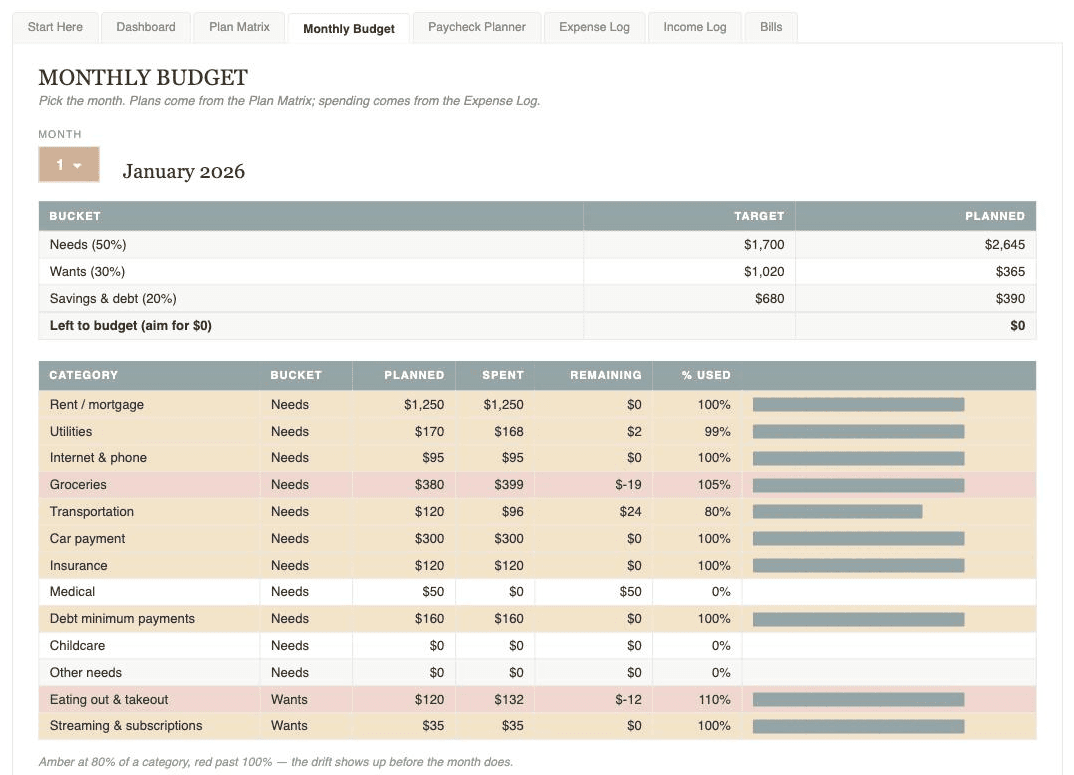
All money stays in checking, while an app, spreadsheet, or notebook tracks each envelope's planned, spent, and remaining amount.
This is simple and avoids opening multiple accounts. The account balance is not the safe-to-spend number because it includes money reserved for bills and every category.
2. Bank subaccounts or buckets
Some institutions allow named buckets, spaces, or multiple accounts. Check:
- monthly and minimum-balance fees;
- transaction or withdrawal limits set by the institution;
- whether the debit card spends from a specific bucket or general checking;
- transfer speed;
- overdraft behavior; and
- deposit-insurance treatment.
Do not assume a named bucket controls card spending. In many systems, it is organizational rather than a hard payment boundary.
3. Separate spending card or prepaid product
A separate debit or prepaid balance can create a practical limit. Compare activation, monthly, reload, ATM, inactivity, and replacement fees. Review error and loss protections and how quickly money can be recovered.
Do not open several fee-charging products merely to imitate free spreadsheet categories.
A hybrid system for 2026
Many households need only one physical envelope:
- Physical cash: the category where tapping creates the most drift, such as restaurants or personal spending.
- Digital categories: groceries, fuel, online shopping, and shared spending.
- Bank account: bills, savings, debt, and sinking funds.
This design uses cash where it changes behavior and digital tools where convenience, records, and purchase protections matter.
Cash envelopes with irregular income
Do not fund a full month based on hoped-for income.
Use this sequence each time income clears:
- Cover obligations due before the next expected payment.
- Protect food, transport, medicine, and other essentials.
- Make required minimum payments.
- Fund priority variable envelopes.
- Fund optional envelopes only with money actually available.
You can use a percentage for optional categories, but essentials still need a realistic dollar plan. During a low-income period, reduce optional envelope refills rather than taking cash back from protected bills.
If income arrives as cash, record it before dividing it. Cash earnings may still have tax and reporting obligations; envelope budgeting does not change those rules.
Cash envelopes for couples and families
Shared envelopes need shared operating rules.
Agree on:
- which categories are shared;
- where the envelope or digital total lives;
- who records purchases;
- what amount can be moved without discussion;
- what happens when one person makes an online purchase; and
- when the household reviews the system.
Separate personal-fun envelopes can reduce monitoring and conflict. Shared essentials such as groceries need one current total, not two envelopes that unknowingly spend the same plan.
For children or teens, a small envelope can teach planning, but do not make them responsible for essential costs that belong to the household budget.
Benefits and restricted-use funds
SNAP, transit benefits, health accounts, dependent-care funds, and other benefits may be restricted to specific purchases. Do not convert, transfer, or use those funds outside program rules.
Track the available benefit as a separate digital envelope and record eligible spending. Keep unrestricted cash separate so the remaining balances stay clear.
Troubleshooting common problems
| Problem | Likely cause | Practical fix |
|---|---|---|
| Envelope empties in the first week | Amount is unrealistic or early spending is too high | Review receipts; increase essential amount or divide into weekly sections |
| Cash remains but card spending exceeds the category | Online purchases are outside the system | Use one card-purchase method and deduct immediately |
| Too many envelopes become confusing | The system covers every category | Return to one to three variable categories |
| Partners report different remaining amounts | No shared ledger or update rule | Use one shared digital total or reconcile purchases daily |
| Frequent ATM fees | Refill schedule or ATM access is inefficient | Withdraw less often at an in-network option or switch to digital envelopes |
| Money is repeatedly borrowed from bills | Complete budget is too tight | Protect bills in the account and address the structural shortfall |
| Cash causes anxiety or safety concerns | Physical format is a poor fit | Use manual digital envelopes instead |
| Tracking coins and receipts feels excessive | Detail level is too high | Track category totals, not every item, and use a coin rule |
| Leftovers trigger unnecessary spending | No rollover policy | Set a category cap or sweep verified leftovers to a goal |
A 14-day beginner experiment
Before day 1
- Choose one category.
- Review the previous four weeks of spending.
- Set a realistic two-week amount.
- Choose physical cash or a manual digital envelope.
- Write the refill date and online-purchase rule.
During the test
- Check the remainder before each purchase.
- Keep receipts or transaction notes.
- Do not refill early.
- Record any deliberate transfer.
- Notice which purchases change when the remainder is visible.
At day 14
Ask:
- Was the amount realistic?
- Was cash accepted where needed?
- Did the system reduce regret or only create work?
- Did online spending stay inside the limit?
- Did anyone in the household lack access to the current total?
- Should the amount, category, or format change?
Add a second envelope only if the first one improves decisions.
Frequently asked questions
Does an empty envelope always mean I must stop spending?
For optional categories, usually pause or deliberately move money from another optional category. For essentials such as groceries, review the remaining household resources and fund the genuine need. Do not go without necessary food or medicine merely to preserve an envelope rule.
Should I withdraw cash weekly or monthly?
Weekly reduces the amount carried and can make pacing easier. Monthly requires fewer withdrawals and may avoid fees. Choose based on pay timing, ATM access, safety, and how quickly the category tends to be spent.
Can I use envelopes with credit cards?
Yes, using a written or digital deduction. Subtract the purchase from the envelope immediately and follow the card's payment terms. The envelope does not protect against interest, late fees, or debt if the card balance is not handled correctly.
What happens to refunds?
Return a refund to the category that funded the purchase. For a card refund, add it back only after the credit posts. For cash, place it in the envelope immediately and keep the return receipt until resolved.
Should sinking funds be cash envelopes?
Small, near-term funds may be manageable in cash, but larger balances are generally safer in an appropriate insured account. Track the fund digitally and use cash only when the planned purchase occurs.
Is cash budgeting better than zero-based budgeting?
They perform different jobs. Zero-based budgeting assigns all available money. Envelopes create category-level limits. A household can use both, either, or neither.
Start with one envelope
Choose the variable category that repeatedly surprises you. Give it a realistic two-week amount, decide how online purchases will be deducted, and check the remainder before spending.
If that visible limit improves decisions without creating excessive work or risk, keep it. The successful system is not the one with the most envelopes; it is the smallest one that makes the budget easier to follow.

Written by
I fixed my own money with a spreadsheet and a Sunday morning, and now I build the tools I wish I’d had. I manage a dental practice in Greensboro, North Carolina, and I have never once told anyone their problem was the coffee.


