25 Things to Stop Buying to Save Money
By Nora Bennett · June 23, 2026 · Updated August 6, 2026
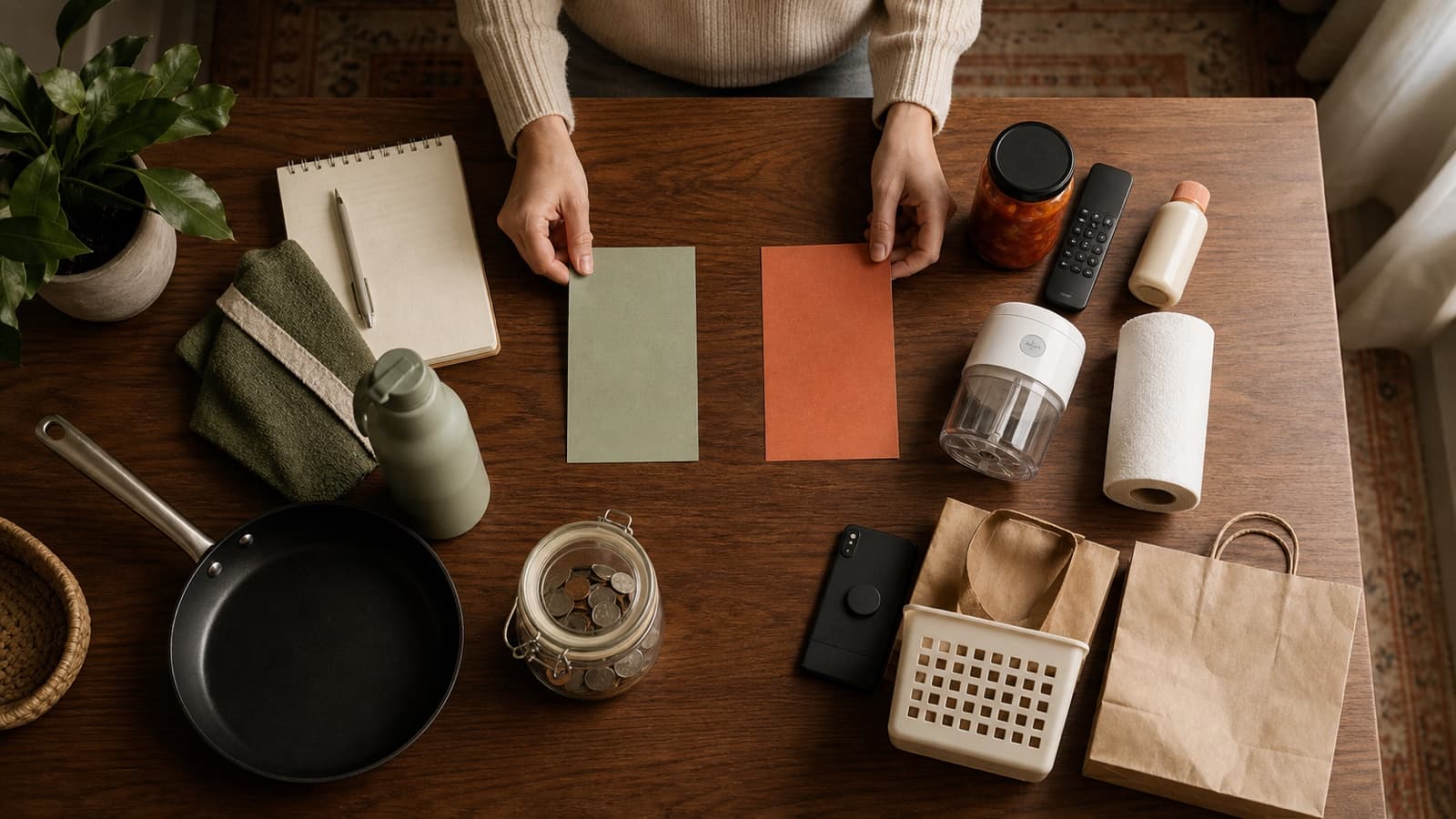
The best things to stop buying are not the purchases that make your life noticeably better. They are the purchases that happen on autopilot, duplicate something you own, create more waste than value, or quietly renew after you stop using them.
This distinction matters. A list that tells everyone to cut coffee, convenience food, and every small pleasure is not a savings plan. It is a guilt plan. The goal here is to identify low-value spending in your household, replace the function where necessary, and send the money somewhere useful.
You do not need to stop buying all 25 things. Choose three to five that match your real transactions. Test the changes for 30 days. Keep the swaps that improve your finances without making daily life harder than the savings are worth.
Calculate your real savings before you quit anything
Annual savings claims online often assume every household buys the same amount at the same price. Yours does not. Use your own cost:
- Weekly purchase × 52 = annual cost
- Monthly purchase × 12 = annual cost
- Purchase every six weeks × 8.7 = approximate annual cost
- Daily purchase × 365 = annual cost
Then calculate net savings:
Avoided annual spending − replacement costs − new fees = net annual savings
If you stop buying $12 snack packs each week but spend $4 on bulk snacks and reusable containers, the savings are not $624. They are closer to $416 for the first year: ($12 − $4) × 52, minus any container cost.
Also account for time, access, storage, health, and waste. Pre-cut vegetables may cost more per unit, but they can be worth buying if they help someone with limited mobility cook safely or prevent produce from spoiling. The cheaper sticker is not always the cheaper outcome.
Food and kitchen purchases
Food is a useful place to begin because decisions repeat every week. It is also an area where aggressive cuts can affect health, accessibility, and family routines. Make changes that reduce waste and convenience premiums without making meals unrealistic.
1. Groceries bought without a meal plan
What to stop: Buying a full cart of ingredients because they look useful, then deciding what to cook later.
Why audit it: A refrigerator can be full while the household still feels like there is “nothing for dinner.” Ingredients that do not combine into meals are more likely to spoil, and missing one crucial ingredient can trigger another shopping trip or takeout order.
Replacement: Before shopping, choose four to six dinners that fit the coming week. Check the freezer, refrigerator, and pantry first. Put only missing ingredients on the list, plus realistic breakfasts, lunches, and snacks.
USDA guidance recommends planning meals, checking what you already have, and using a shopping list to reduce unnecessary purchases. Its meal-planning and budgeting resources include options designed for different household needs.
Keep buying it when: Plans change often because of work, caregiving, or health. In that case, plan flexible building blocks—such as a cooked protein, grain, vegetables, and two quick backup meals—rather than seven exact recipes.
2. Duplicate pantry and freezer items
What to stop: Buying another sauce, spice, frozen meal, or bag of rice because you cannot remember whether one is already at home.
Why audit it: Duplicates tie up grocery money and hide older food until it expires.
Replacement: Keep a short “use first” list on the refrigerator. Before each shopping trip, photograph the pantry shelves and freezer or maintain a simple inventory of expensive and frequently duplicated items. You do not need to catalog every teaspoon of salt.
Once a month, plan a use-what-you-have week. Build meals around open packages, frozen portions, and produce nearing the end of its useful life.
Savings test: Add the value of food discarded or forgotten during one month. Reducing that number is more reliable than assuming a generic grocery percentage.
3. Bulk packages that are not cheaper for you
What to stop: Buying the largest package automatically because the shelf label calls it a value size.
Why audit it: Bulk only saves money when the unit price is lower and the household uses the product before it spoils or becomes unwanted. It can also create storage problems and encourage overuse.
Replacement: Compare the unit price, then buy the amount you can use. For perishables, divide or freeze portions immediately if safe for that food. For a new product, try the smaller size before committing to a warehouse quantity.
Keep buying it when: The item is used consistently, storage is available, the unit price is genuinely lower, and buying it does not crowd out money needed for the rest of the grocery list.
4. Premium brands bought by default
What to stop: Choosing the familiar national brand without comparing ingredients, size, quality, or unit price.
Why audit it: Brand preference can be valuable, but it should be a preference—not an unexamined rule applied to every pantry and household item.
Replacement: Test store brands one category at a time. Flour, oats, canned vegetables, cleaning basics, and over-the-counter household goods may have acceptable alternatives, but compare labels and requirements that matter to you.
Run a blind household test where practical. If nobody notices a difference, keep the less expensive option. If the substitute performs poorly or causes waste, return to the preferred brand without guilt.
Important exception: Do not substitute products when an allergy, medical instruction, dietary requirement, safety certification, or professional requirement makes the exact product important.
5. Pre-cut or convenience ingredients that still spoil
What to stop: Paying for washed, chopped, peeled, or portioned food and then throwing it away.
Why audit it: Convenience food is not automatically wasteful. It becomes expensive when the convenience premium does not lead to the food being eaten.
Replacement: Compare three outcomes, not two:
- Whole ingredient that you prepare and eat.
- Convenience ingredient that you eat.
- Whole ingredient that spoils because preparation never happens.
Option two can be cheaper than option three. Keep convenience where it supports disability access, health, time limits, or consistent meals. Stop buying only the formats that repeatedly go unused.
6. Single-serve packages for food eaten at home
What to stop: Individually wrapped snacks, yogurt, drinks, and lunch items when the household consumes them mainly at home.
Why audit it: Portion packaging often adds a convenience premium. It can also make it harder to use the exact amount wanted.
Replacement: Compare unit prices. Buy a larger container and portion it into containers you already own. Start with one item that is easy to divide safely, not an entire kitchen overhaul.
Keep buying it when: Individual packaging prevents food waste, supports portioning needs, makes school or work lunches possible, or is necessary for hygiene and caregiving. The goal is not to trade money savings for a system nobody will use.
7. Bottled water when your home water is suitable
What to stop: Routine cases of bottled water purchased without checking whether safe, acceptable tap or filtered water is available.
Why audit it: Refillable water can reduce repeated spending, but “just drink tap water” is not safe or practical advice for every location or household.
Replacement: Check your local water quality first. The EPA provides Consumer Confidence Reports for public water systems and information about home water testing and filtration. Private-well users may need testing appropriate to their location.
If the water is suitable but taste is the problem, compare the annual cost and replacement schedule of an appropriate filter with your current bottled-water spending. Follow the manufacturer's filter-change and cleaning instructions.
Keep buying it when: Local authorities advise it, water safety is uncertain, travel conditions require it, a medical professional recommends it, or reliable water access is limited. Keep emergency water according to local preparedness guidance.
8. Delivery fees on meals you did not plan to order
What to stop: Turning an undecided dinner into menu prices, service fees, delivery fees, and a tip several times a month.
Why audit it: Delivery can be genuinely useful, but its total cost is easy to underestimate when the app separates charges across several lines.
Replacement: Keep two realistic emergency meals at home—not aspirational cooking projects. Examples might include frozen meals, eggs and toast, pasta and jarred sauce, soup and bread, or another option suitable for your household.
When ordering, compare the final checkout total with pickup and direct restaurant ordering where available. Do not reduce tips to manufacture savings; reduce the frequency or choose a lower-cost ordering method.
Keep buying it when: Delivery supports disability access, illness, caregiving, transportation limits, safety, or an intentionally budgeted pleasure.
9. Coffee formats that cost more without adding value
What to stop: Automatically buying pods, bottled coffee, drive-through coffee, specialty beans, and café drinks at the same time.
Why audit it: The issue is not coffee. It is paying for several overlapping coffee systems while enjoying only one.
Replacement: Keep the format you value and simplify the rest. If café coffee is a meaningful weekly ritual, budget it and make ordinary coffee at home. If pods prevent wasted pots and rushed takeout stops, they may be the practical choice. Compare cost per serving using what you actually consume.
Savings test: Count coffee purchases for four weeks and label each one “planned and enjoyed” or “automatic and forgettable.” Cut the second group first.
10. Food bought only because a coupon or promotion exists
What to stop: Adding an item you did not plan to buy because it earns points, activates a coupon, or completes a buy-more promotion.
Why audit it: A discount reduces the price of a purchase; it does not turn an unnecessary purchase into savings.
Replacement: Build the list first, then search for offers that apply to it. Compare the final unit price with the alternative brand and size. Ignore points that expire before you would naturally use them.
Ask one question: Would I buy this quantity at this price if the promotion badge disappeared? If not, leave it.
Subscriptions and digital purchases
Recurring charges deserve a separate audit because they can continue after the original decision is forgotten.
11. Streaming services you are not currently using
What to stop: Keeping every service active all year for one show, one sports season, or the possibility that someone might watch it.
Replacement: List each service, price, billing date, and who uses it. Keep the services used regularly. Cancel or pause the rest, then rotate when a specific program returns. Check cancellation terms and whether profiles or saved content will remain.
Do not assume a bundle is cheaper. Compare the bundle's annual total with the services you would choose separately.
Practical rule: If nobody can name what they watched on a service during the last billing period, it deserves review—not automatic cancellation, but review.
12. Free trials without a cancellation plan
What to stop: Starting a trial without recording the conversion date, full renewal price, and cancellation method.
Replacement: Before entering payment details, take a screenshot of the terms, set a calendar reminder several days before renewal, and confirm how cancellation works. Cancel immediately if the service allows continued access through the trial period and you already know you do not want renewal.
The FTC advises consumers to read renewal terms, confirm the expected price, keep cancellation records, and monitor statements after canceling. See its guidance on free trials and auto-renewing subscriptions.
If a company continues charging after cancellation, save your records and promptly follow the dispute guidance from your card issuer and the FTC.
13. Duplicate music, cloud, storage, and security plans
What to stop: Paying twice because partners created separate accounts, a device includes a service you also buy directly, or an old plan continued after switching providers.
Replacement: Search three months of card and bank statements for recurring merchant names. Review app-store subscriptions separately because the billing name may differ from the service name.
Compare individual and household plans carefully. Check storage capacity, privacy needs, account ownership, cancellation consequences, and whether combining accounts would expose information that should stay separate.
Do not consolidate blindly: Back up important files and confirm what happens to stored data before downgrading cloud storage.
14. Premium apps used less than their free features
What to stop: Paying annually for a productivity, photo, fitness, language, or finance app whose paid features you rarely use.
Replacement: Write down the exact paid feature you need. Check usage history if the app provides it. Downgrade for one billing cycle and see whether the free tier, a one-time-purchase alternative, or a tool already included with your device covers the function.
Keep buying it when: The app protects data, supports health or accessibility, saves meaningful work time, earns income, or replaces a more expensive service. Evaluate the outcome, not only the login count.
15. Delivery memberships that change how much you order
What to stop: Keeping a membership because it makes each order feel cheaper while increasing order frequency or encouraging purchases to justify the fee.
Replacement: Review the previous six or twelve months. Add membership fees, service charges, markups, and delivery charges. Compare that total with what the same orders would have cost through pickup, direct ordering, or planned shopping.
Do not use only “fees saved,” because that assumes every order would have happened without the membership.
Break-even test: Membership price ÷ realistic fee saved per order = orders needed to break even. Then ask whether you actually want that many orders.
Home and cleaning purchases
16. A separate cleaner for every surface
What to stop: Buying multiple specialty cleaners that perform overlapping jobs and sit half-used.
Replacement: Read the care instructions for your actual surfaces and appliances. Keep the minimum products that safely cover them, then finish what you already own before replacing it.
Safety rule: Never mix cleaning products unless the manufacturer explicitly says it is safe. In particular, mixing bleach with ammonia or acids can create dangerous gases. Saving money is not worth improvising household chemistry.
Specialty products may still be necessary for stone, wood finishes, electronics, mold remediation, allergies, or manufacturer warranty requirements.
17. Disposable paper and plastic used by default
What to stop: Using paper towels, disposable plates, cutlery, and storage products for every ordinary task.
Replacement: Put washable cloths where paper towels are normally reached. Use durable dishes for routine meals and reusable containers for food that can be stored safely.
Keep disposables for situations where sanitation, caregiving, disability, emergencies, water restrictions, or cleanup requirements make them the better option. This is a reduction experiment, not a purity test.
Calculate savings after laundry and replacement costs rather than treating reusables as free.
18. Air fresheners and fragrance refills bought on repeat
What to stop: Automatically replacing plug-ins, sprays, scent boosters, and candles because a room does not smell “new.”
Why audit it: Fragrance may mask a moisture, ventilation, pet, trash, or cleaning issue that should be addressed directly.
Replacement: Identify the source first. Empty waste, wash fabrics, clean filters, address moisture safely, and ventilate when weather and air quality allow. Keep fragrance only if you genuinely enjoy it and it does not create health concerns for the household.
Keep buying it when: It is a planned pleasure and safe for the people and animals in the home. Do not use home fragrance as a substitute for investigating persistent or unusual odors.
19. Single-purpose kitchen and home gadgets
What to stop: Buying a tool for one recipe or task before testing whether an existing knife, pan, attachment, or hand tool can do it.
Replacement: Borrow the item, rent it, buy secondhand, or wait until you have repeated the task enough to prove the tool will be used. Apply a “three-use forecast”: name the next three realistic times and dates you expect to use it.
Keep buying it when: A specialized tool improves safety, accessibility, speed, or work quality enough to justify its storage and maintenance.
The mistake is not owning a rice cooker you use every week. It is owning five gadgets bought for imagined versions of your routine.
20. Organizers bought before decluttering
What to stop: Purchasing bins, baskets, drawer inserts, and shelving before deciding what deserves storage.
Why audit it: Organizers can turn excess possessions into neatly arranged excess possessions. They also add new dimensions that may not fit the space.
Replacement: Empty one area, group like items, discard or donate what is no longer useful, then measure the remaining contents and the available space. Repurpose containers already in the home before buying new ones.
Buy an organizer only when it solves a defined problem: what will it hold, where will it live, and what dimensions must it have?
Personal, clothing, and impulse purchases
21. Backups before the current product is nearly finished
What to stop: Buying replacement shampoo, lotion, cosmetics, supplements, or household products while several usable versions remain open.
Replacement: Create a small “finish first” area. Put open products there, note any expiration or use-by instructions, and replace only when the current item is close to empty.
Sales are not useful if the product changes, expires, causes irritation, or remains forgotten. A backup can make sense for medically necessary, hard-to-find, or frequently used essentials; keep the quantity tied to realistic usage and storage guidance.
22. New beauty or grooming products that duplicate the same job
What to stop: Buying another cleanser, serum, styling product, or tool because the promise is different while the function is the same.
Replacement: Write a simple routine using products already owned. Add a new product only to solve a specific need, and change one item at a time so you can tell what works.
Do not replace prescribed or medically recommended products based on a savings list. For skin, hair, or health concerns, follow appropriate professional advice.
Savings test: Total the products discarded unfinished during the last year. That is the clearest target.
23. Trend clothing without an outfit plan
What to stop: Buying a low-priced item because it looks exciting in isolation but does not work with your wardrobe, climate, care routine, or actual week.
Replacement: Before buying, name three outfits using items you own and three likely occasions within the next three months. Check fabric care, comfort, fit, and return terms. Consider secondhand where practical.
Use cost per wear as a review tool, not a reason to overspend:
Purchase price ÷ realistic number of wears = estimated cost per wear
A higher price does not guarantee quality, and a low price is not automatically wasteful. The useful question is whether the item will be worn enough to justify its cost and care.
24. Replacements for items that still work
What to stop: Upgrading a phone, case, appliance, furniture item, or home décor because the current version feels old rather than because it no longer serves its function.
Replacement: Define the problem the replacement must solve. Try maintenance, repair, a new battery, cleaning, rearranging, or a low-cost part first when safe and economical. Set a replacement fund and buy after research rather than during a frustration spike.
Replace promptly when safety, security updates, energy failure, repair economics, or accessibility requires it. “Use it until it becomes dangerous” is not frugal advice.
25. Filler items added for free shipping or a promotion
What to stop: Adding an unplanned product to avoid a smaller shipping fee, reach a discount threshold, or unlock a gift.
Why audit it: Spending $18 to avoid a $7 delivery charge still increases the order by $11 unless the filler was already on your near-term list.
Replacement: Compare four options:
- Pay the shipping fee.
- Wait and combine genuine needs into one order.
- Use free pickup if the travel cost and time make sense.
- Buy locally after comparing the total cost.
Keep a future-needs list, but do not buy six months of something just to make the checkout animation celebrate.
Three invisible costs to stop paying too
They are not physical “things,” but these charges belong in the same audit.
Bank account fees
Review monthly maintenance, overdraft, nonsufficient-funds, ATM, paper-statement, and transfer fees. Ask the institution how each fee can be avoided and compare the balance or direct-deposit requirements with other accounts.
The CFPB notes that institutions must disclose maintenance fees and that consumers can compare lower-fee or no-fee accounts. Start with its guidance on monthly account fees.
Do not close an account until outstanding checks, deposits, subscriptions, and automatic payments have moved safely.
Late and convenience fees
List every fee paid during the last six months and identify the cause. A bill calendar, due-date change, low-balance alert, or different payment method may solve the pattern. Confirm that a “convenient” payment method is not adding a fee that another approved method avoids.
Unused memberships
Review gyms, clubs, warehouse memberships, professional groups, and memberships bundled with other products. Compare the total annual cost with the value actually used—not the value advertised.
What should you not stop buying?
Do not let a savings challenge create a larger future cost or reduce safety.
Protect these categories:
- Prescribed care and preventive health: medicine, medically recommended products, dental care, screenings, and required treatment.
- Safe food and water: adequate nutrition, allergy-safe food, infant needs, and water appropriate to local conditions.
- Insurance and essential maintenance: required coverage and maintenance that prevents unsafe breakdowns or larger damage.
- Accessibility and caregiving tools: convenience can be necessary, not indulgent.
- Income-producing tools: reliable equipment, software, transport, licensing, and training required for work.
- Items you deliberately value: a planned hobby, coffee ritual, family meal, or subscription can belong in the budget when it genuinely improves life.
The goal is not to win a contest for the fewest purchases. It is to stop paying for things you would not choose again with full attention.
A seven-day household purchase audit
Day 1: Recurring charges
Review three months of bank, credit-card, app-store, and payment-platform statements. List every recurring charge, renewal date, and cancellation method.
Day 2: Refrigerator and freezer
Identify food that must be used soon. Plan meals around it and freeze safe leftovers promptly. USDA food-safety guidance says most cooked leftovers should be refrigerated and used within three to four days or frozen; see its food-safety basics.
Day 3: Pantry and household supplies
Find duplicates, unopened backups, and products with overlapping jobs. Create the finish-first area.
Day 4: Bathroom and personal products
Count open products. Pause replacements for any category with more than one usable option.
Day 5: Digital accounts
Review cloud storage, apps, streaming, and free trials. Back up data before downgrading anything important.
Day 6: Fees and impulse triggers
Total bank fees, delivery charges, shipping fillers, checkout purchases, and unplanned convenience orders from the last month.
Day 7: Choose only five experiments
For each experiment, write:
- what you will stop buying;
- what function it served;
- the replacement, if needed;
- your normal monthly cost;
- any replacement cost; and
- where the net savings will go.
Turn avoided purchases into actual savings
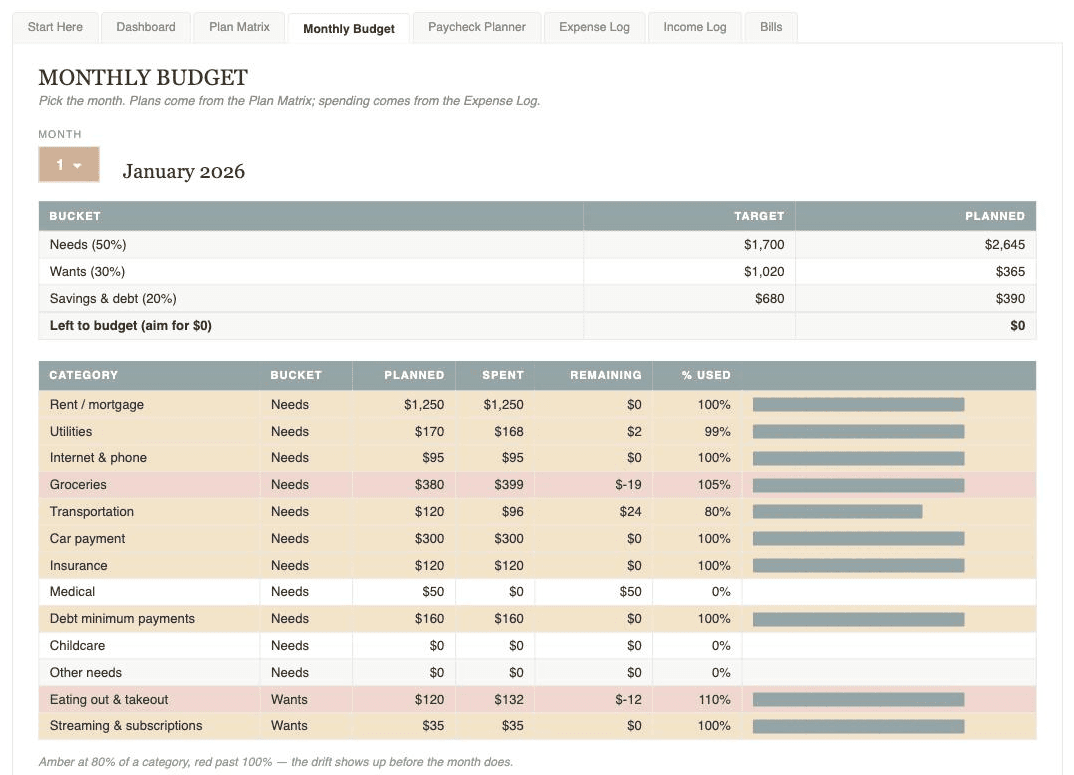
Not buying something does not automatically create savings. The money can disappear into another category unless it receives a new job.
Use this process:
- Measure the old pattern. Use transactions, not a generic online estimate.
- Run the swap for 30 days. Track replacement spending and any rebound purchases.
- Calculate the net reduction. Old cost minus new cost.
- Lower the category deliberately. Do not cut it before the experiment proves the amount.
- Transfer the difference. Send it to an emergency fund, sinking fund, or debt payment.
Example: you cancel $38 in unused subscriptions, reduce delivery costs by $45, and save $27 after replacing single-serve snacks. Your tested monthly reduction is $110. Automate or schedule that $110 toward a named goal only after confirming the new pattern works.
Frequently asked questions
How many things should I stop buying at once?
Three to five is enough for a first 30-day experiment. Changing too many systems at once makes it difficult to identify which swaps save money and which create inconvenience or rebound spending.
Is buying the cheapest version always the goal?
No. Compare total cost, expected use, durability, safety, storage, maintenance, accessibility, and return policy. A cheap product that fails quickly or goes unused can cost more per useful outcome.
What if my partner keeps buying something on my list?
Do not cancel or remove a shared product unilaterally. Review the household cost and use together, then let each person identify their own low-value spending first. Shared savings works better when the replacement still meets everyone's needs.
How long should I test a replacement?
One billing cycle works for many subscriptions and household products. Food habits may need four weeks. Seasonal memberships require a longer view. Keep records so one unusually busy or quiet week does not decide the result.
Should I stock up during a sale?
Only when the item is already used regularly, the unit price is genuinely lower, storage is available, the product will remain usable, and the purchase does not take money from current needs. A stockpile is not savings until the household consumes it instead of buying again.
What if a convenience purchase saves me significant time?
Keep it when the time has real value—especially for disability, caregiving, work, health, or preventing a more expensive fallback. Look for a cheaper way to preserve the function rather than removing it automatically.
Start with one statement, not the whole house
Open your most-used card or bank statement and mark five purchases you would not choose again today. Do not begin with the purchases you love. Begin with the ones you barely remember.
Choose replacements, run the 30-day test, and transfer the verified difference. Frugal living works best when it removes spending before it removes quality of life.

Written by
I fixed my own money with a spreadsheet and a Sunday morning, and now I build the tools I wish I’d had. I manage a dental practice in Greensboro, North Carolina, and I have never once told anyone their problem was the coffee.