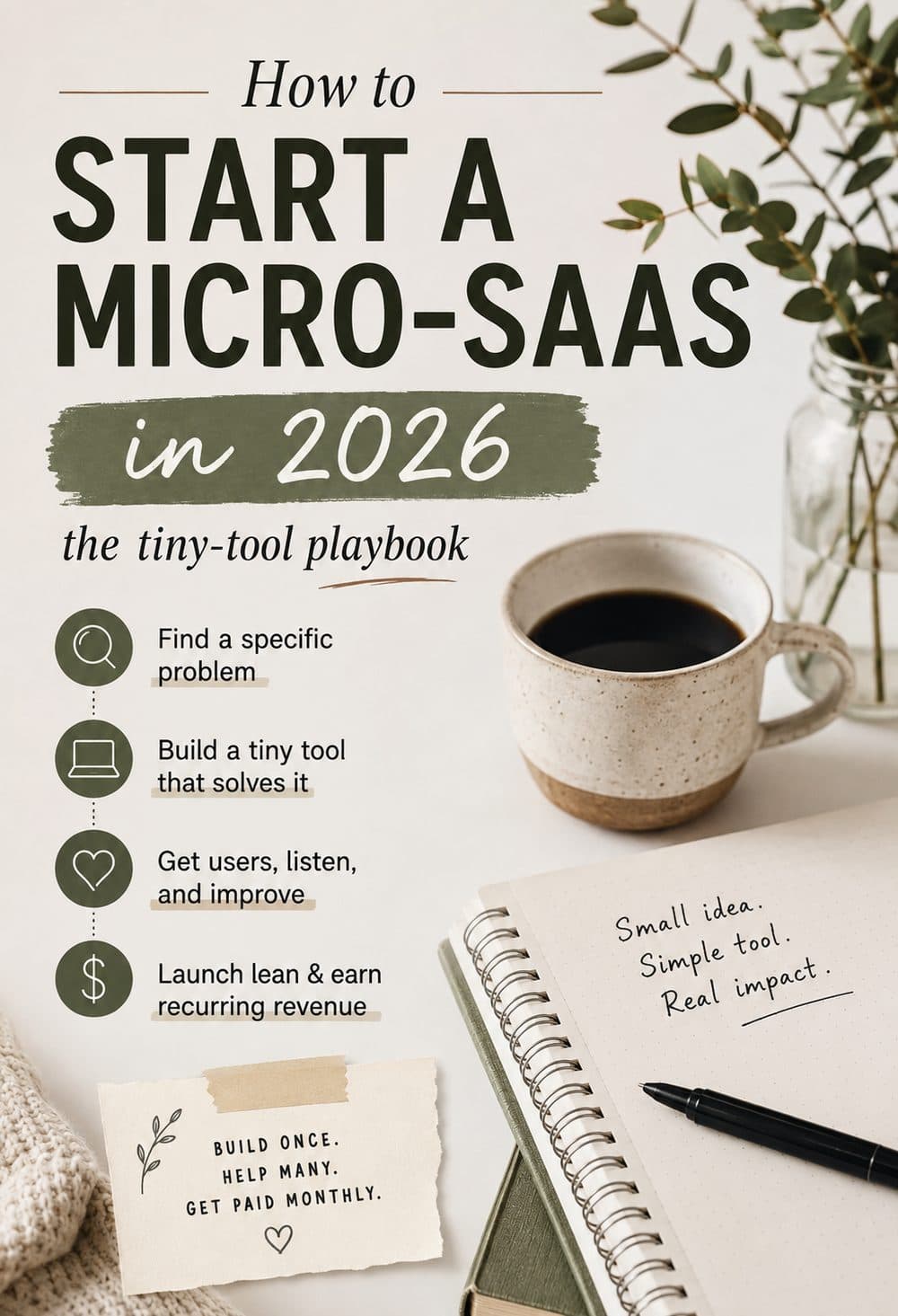
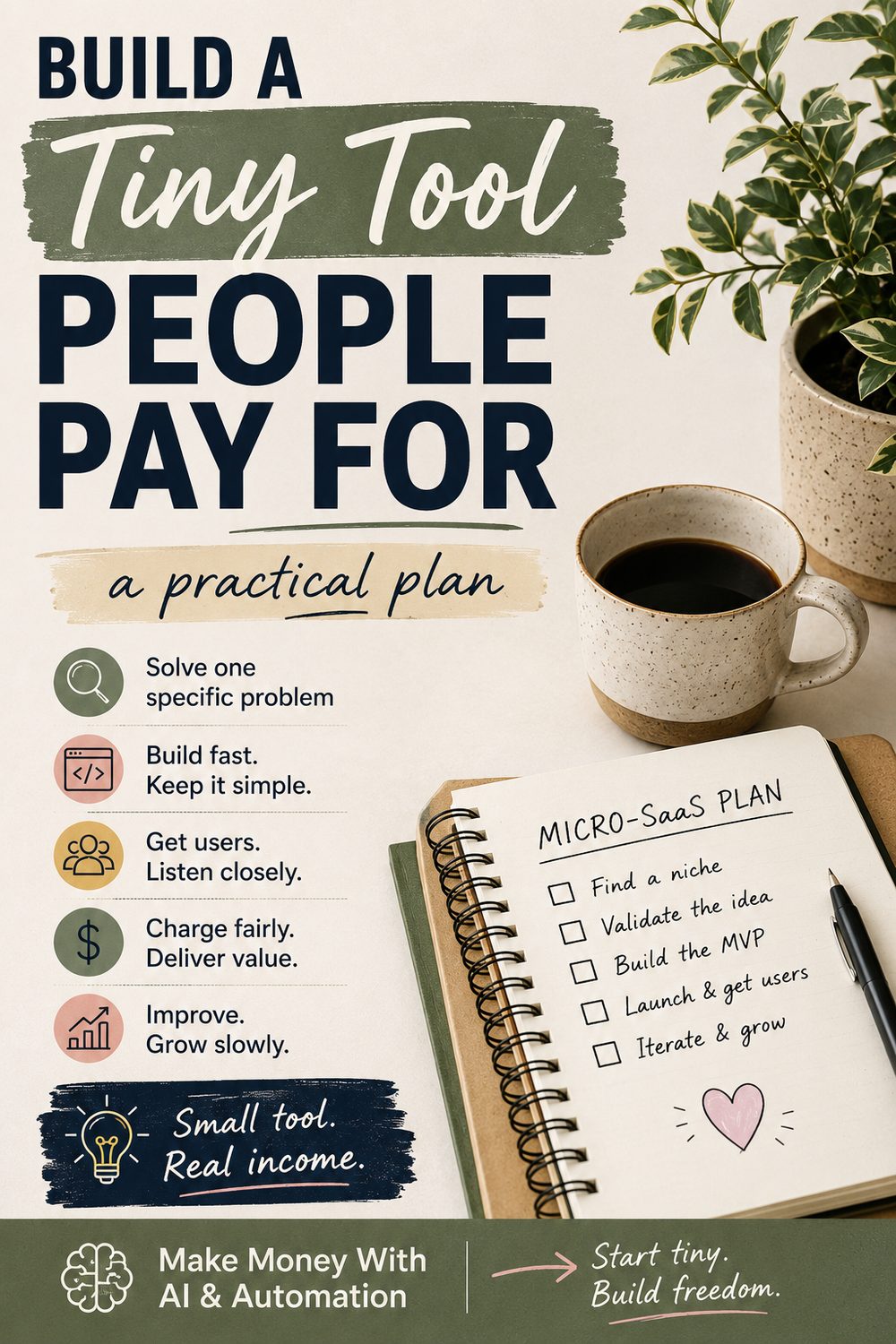
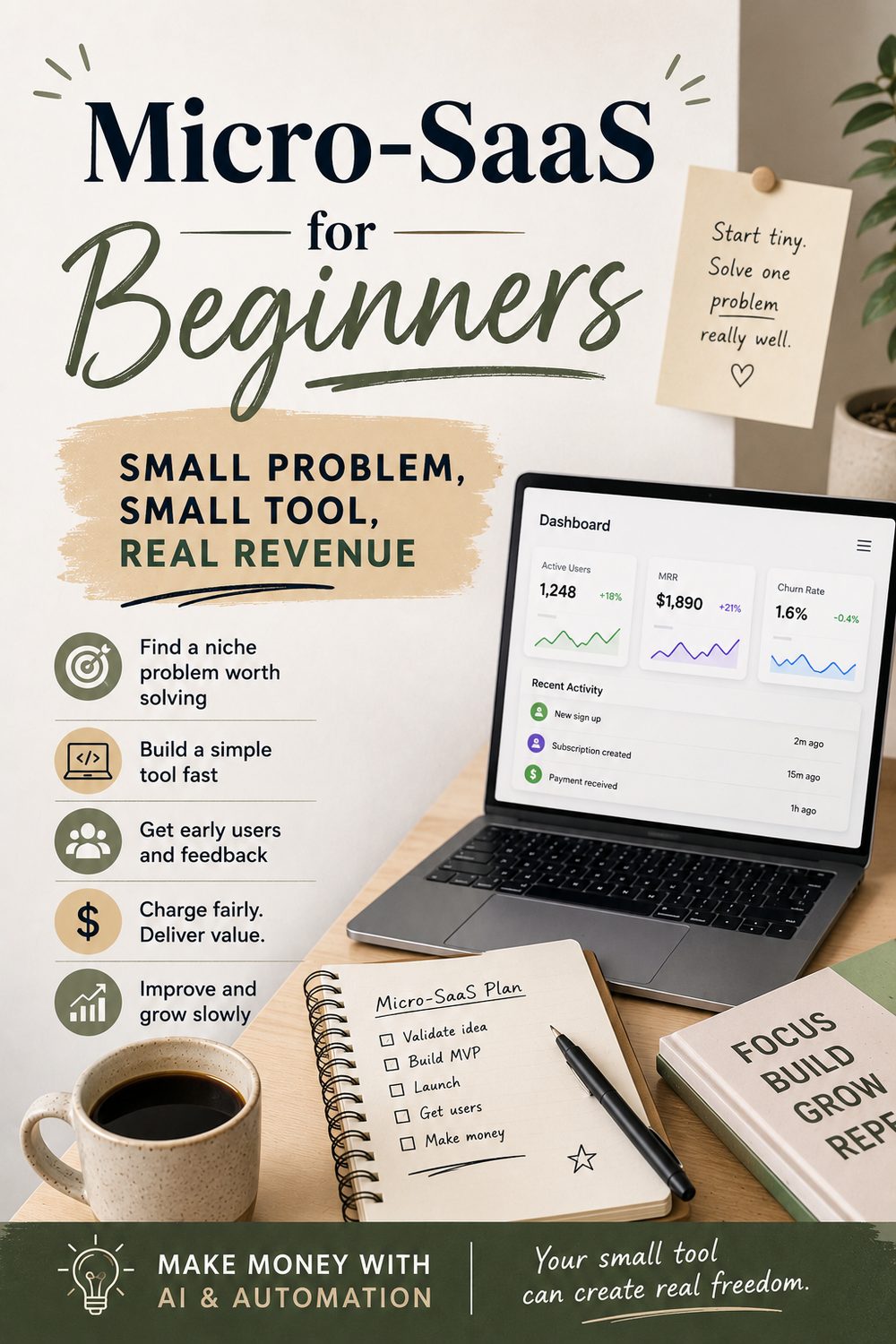
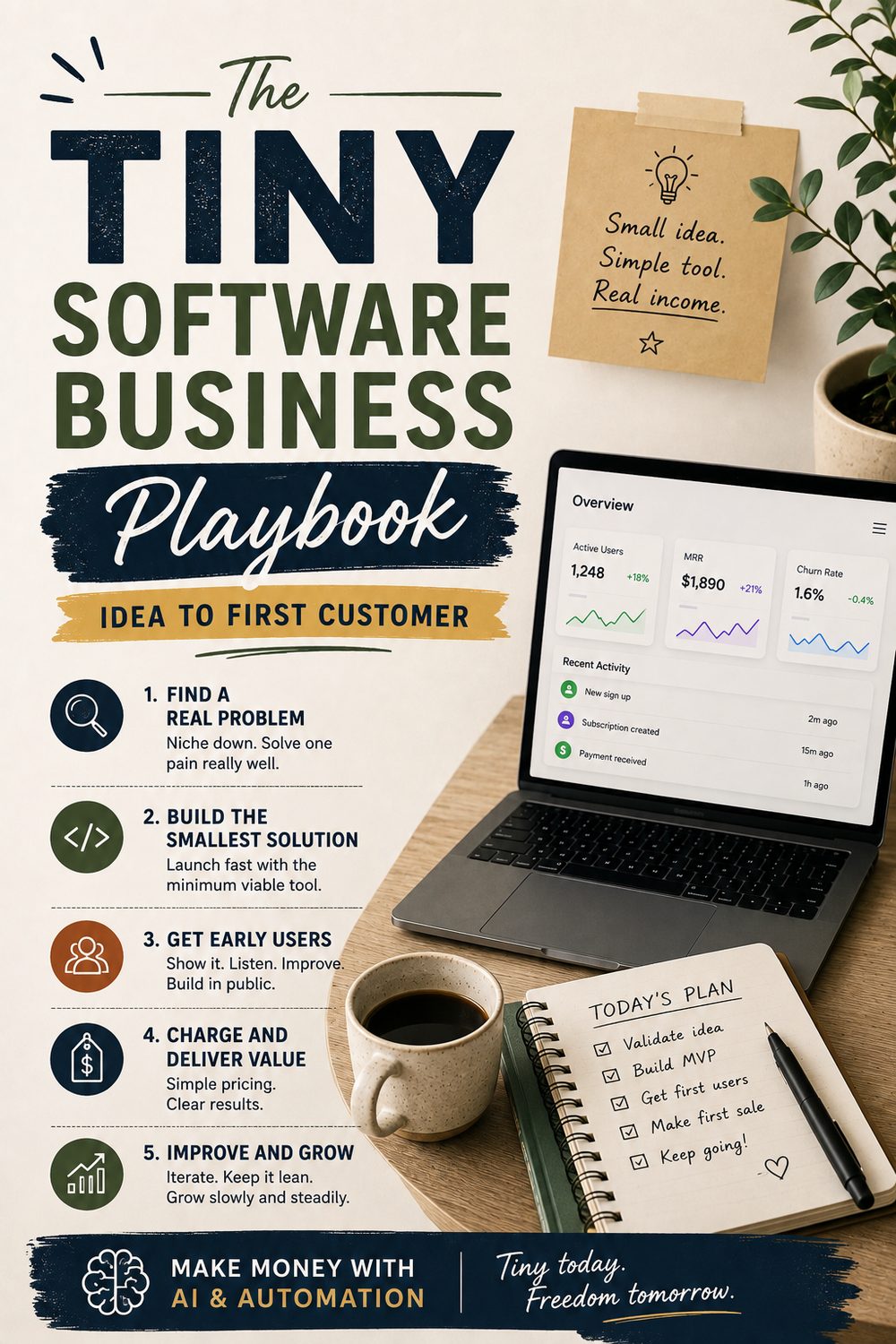
How to Start a Micro-SaaS in 2026: A Practical Tiny-Tool Playbook
By Nora Bennett · July 7, 2026

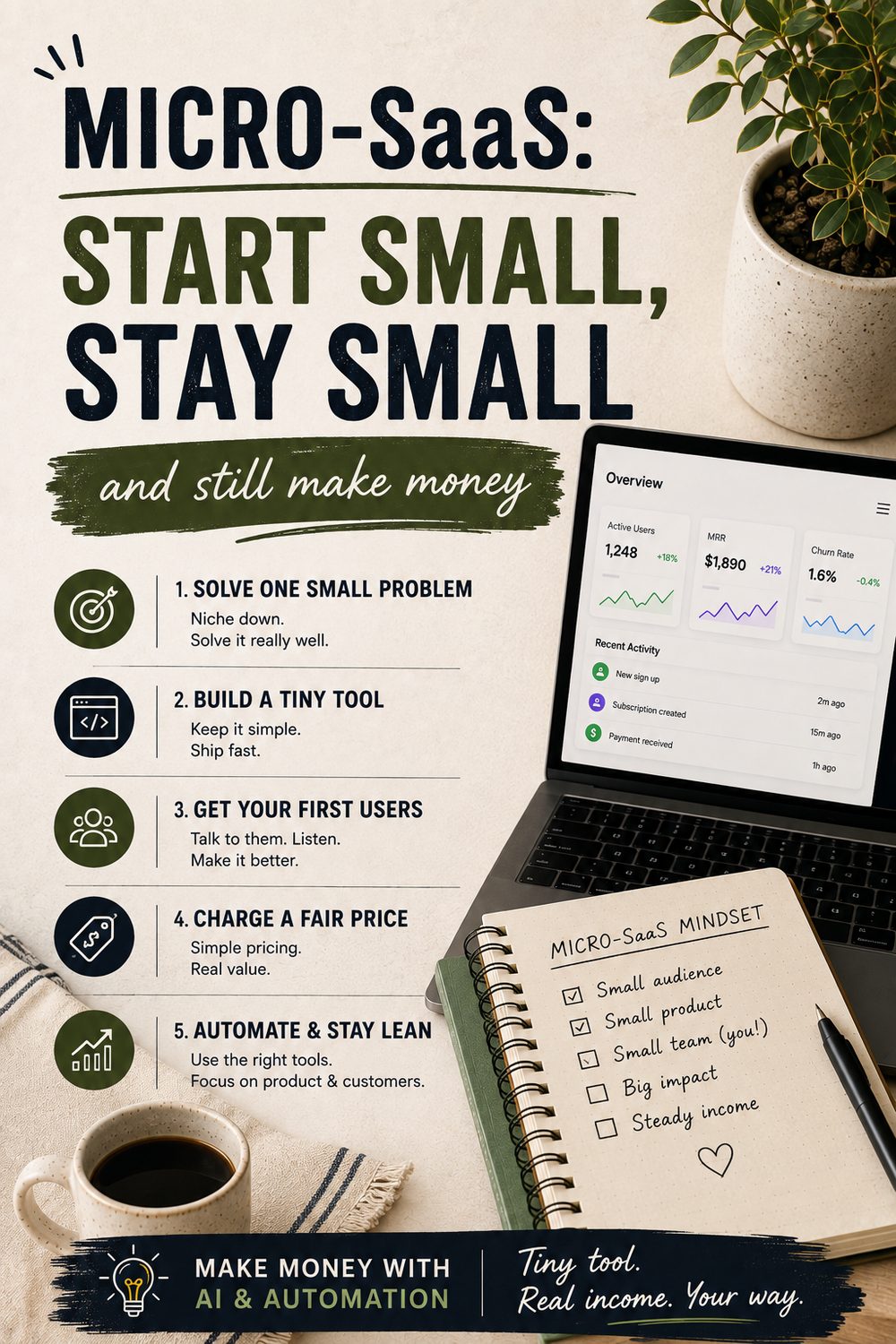
A micro-SaaS is what happens when a small useful tool acquires a login, a payment page and a permanent place in your calendar.
The internet usually tells the story backward. You see the founder at $10,000 in monthly recurring revenue, not the months when the product made nothing, the launch that fell flat, the support tickets answered before breakfast or the six different ideas that never found a buyer. That missing middle matters more than the revenue screenshot.
This is the deeper guide behind micro-tools and tiny SaaS in my realistic 2026 side-hustle list. It uses four founder stories from Starter Story as case studies, but not as income promises. Their reported numbers belong to their businesses, skills, timing and interview dates. We are here to extract the decisions a beginner can actually use.
What counts as a micro-SaaS?
A micro-SaaS is a narrowly focused software product, usually run by one person or a small team, that charges customers repeatedly. It does one job for a specific group instead of trying to become an all-purpose platform.
Examples include:
- A reminder system for expiring contractor quotes
- A grant-deadline tracker for small nonprofits
- A client check-in dashboard for online coaches
- A tool that turns one type of document into another
- A reporting add-on for a platform a niche already uses
The word micro describes the scope and operation, not necessarily the eventual revenue. The first version should be small enough for one person to understand, test and support. If your idea needs a buyer marketplace, ten user roles, social feeds, live chat, native mobile apps and “AI everywhere,” it is not a tiny tool. It is six companies sharing a trench coat.
A micro-tool is not automatically a SaaS. A calculator sold once for $19 is a digital product. A calculator that saves projects, imports new data every month and charges $19 each month is SaaS. The subscription only makes sense when the value repeats.
Four founder stories worth studying
Read these as evidence of patterns, not a menu of results. Revenue figures below are what founders reported in the linked interviews at that time; they are not independently verified current earnings.
1. Instatus: one clear job, then an adjacent market
In a 2021 Starter Story interview, founder Ali Salah said Instatus was making about $2,000 in monthly recurring revenue, with roughly 111 paying customers and about 4,000 status pages created. The product had a simple job: help companies publish service-status pages and communicate outages.
That customer count is more useful than the headline. Thousands could try the product free; a much smaller group valued the problem enough to pay. The business did not need everyone. It needed a specific type of team for whom outage communication was recurring and important.
Salah also warned against quitting a job before the product has traction. That may be the most financially useful sentence in any SaaS profile. Recurring revenue becomes safer after it recurs, not when the founder adds a pricing page.
Practical lesson: choose a job that repeats, give the free user a useful experience, and make the paid boundary correspond to business value. Keep your existing income while you learn whether strangers will pay.
2. ScreenshotOne: narrow the idea to your unfair skill
Dmytro Krasun told Starter Story that ScreenshotOne had reached about $12,000 a month from 280 customers. The product is an API that lets other companies automate website screenshots.
His useful decision happened before the product. Instead of choosing from every possible software idea, he restricted the list to API products because backend development was his strongest skill. He later described his five-month first build as too slow and said he now tries to launch a tiny single-feature version much sooner.
His standard for validation was also stricter than compliments: people outside his personal network had to find the product, pay and continue using it.
Practical lesson: reduce the idea space to what you can build and maintain unusually well. Then test whether unknown customers use it repeatedly. Friends saying “I would pay for that” is encouragement, not revenue.
3. BlogToPin: painfully specific can still be large enough
In a 2026 Starter Story video, the founder of BlogToPin reported about $16,000 in monthly recurring revenue. The product automates Pinterest pin creation and scheduling for website owners—a narrow task inside one marketing channel.
The founder had experienced the problem personally, researched alternatives and believed he could serve that exact user better, faster and more affordably. The first launch reportedly made zero dollars. He kept learning from the niche rather than interpreting one launch as a final market verdict.
The important idea is not “build a Pinterest tool.” It is that a small niche can contain a high-frequency problem. A website owner who needs several new pins every day feels the pain repeatedly. Repetition creates a reason to subscribe.
Practical lesson: “small audience” and “small opportunity” are not synonyms. Estimate how often the problem occurs, how many reachable buyers have it and what they already spend to solve it.
4. dashp: sell the industry workflow, not the technology
The founder of dashp built commission-tracking software for pest-control companies. In the Starter Story account of building the business to roughly $100,000 in annual recurring revenue, the first version was a no-code prototype. The founder showed it to people in the industry, heard requests for a mobile product, signed the first contract months later and spent the following sales season fixing bugs and supporting customers.
The early goal was one customer, not a viral launch. The product also used pricing designed around the industry's seasonal workforce rather than copying a generic three-tier SaaS table.
Practical lesson: industry knowledge can be more valuable than novelty. Show a rough workflow to the exact buyer, listen to the language they use and price around how their business operates.
The pattern behind all four stories
The products differ, but the sequence is remarkably similar:
- A narrow user: software teams, API customers, Pinterest marketers or pest-control operators—not “small businesses.”
- A repeated job: communicate outages, generate screenshots, publish pins or calculate commissions.
- A credible founder connection: personal use, technical strength or direct industry access.
- A small first promise: one outcome that can be demonstrated without a feature tour.
- A reachable distribution channel: direct conversations, an existing audience, search demand or a concentrated community.
- Months of iteration: the successful number appeared after support, correction and persistence—not after one weekend build.
AI coding tools make step four faster. They do not perform the other five steps for you.
Start with a problem inventory, not an idea list
For one week, collect annoyances from work, hobbies, clients and communities you already understand. Write the current workaround beside each one.
Good clues sound like this:
- “Every Friday I copy these numbers from three systems into one sheet.”
- “We miss the renewal because nobody owns the reminder.”
- “Clients send the same four questions in separate messages.”
- “The existing software does fifty things, and we need this one report.”
- “I pay an assistant to reformat this document every time.”
Weak clues sound like “AI for restaurants” or “a productivity app for everyone.” Those describe a market and a technology, not a job.
Score each problem from zero to two on six questions:
| Test | 0 points | 1 point | 2 points |
|---|---|---|---|
| Pain | Mild irritation | Wastes time | Costs money or customers |
| Frequency | A few times a year | Monthly | Weekly or daily |
| Access | You know nobody | You can find them | You can speak to five now |
| Existing spend | No workaround | Manual workaround | Already paying for help |
| Scope | Many workflows | Two or three jobs | One clear job |
| Retention | One-time result | Occasional reuse | New value every month |
Treat nine out of twelve as a conversation-worthy idea, not permission to build. A high score means “ask buyers,” not “open Cursor.”
Validate it this weekend without building the SaaS
Your first objective is not code. It is one of these forms of evidence:
- Three people independently describe the same painful workflow
- One person gives you their real spreadsheet or process to improve
- One buyer agrees to a paid manual pilot
- One buyer signs a simple letter of intent with a clear price
- Several strangers join a highly specific waitlist from targeted outreach
Saturday morning: interview five potential users
Ask about the last time the problem happened:
- Walk me through what you did.
- What made that frustrating or expensive?
- How often does it happen?
- What have you tried already?
- Who decides whether to pay for a solution?
- What would a successful result look like?
Do not ask, “Would you use an app that…?” Polite people are generous with hypothetical money. Ask for past behavior, current costs and access to the real workflow.
Saturday afternoon: deliver the result manually
Before automating a grant tracker, send one curated deadline report. Before building a reporting dashboard, create the report from exported data. Before making a client reminder tool, run the reminders from a spreadsheet for a week.
This concierge version teaches you which input arrives messy, which output matters and which step actually consumes time. It may also reveal that the customer wants a service, not software. That is useful information—and potentially faster income.
Sunday: sell a pilot
Use a message like this:
I mapped the weekly quote-follow-up process you showed me. I can run a four-week pilot that flags quotes with no response after three days and sends you one daily action list. The pilot is $150, includes setup and uses your exported data. If it saves enough time, I will propose a self-serve version. If it does not, we stop after four weeks.
A paid pilot tests pain, buyer authority and willingness to change behavior. A free waitlist tests curiosity.
Define the smallest paid product
Write this sentence before choosing a tech stack:
When [specific trigger] happens, the tool helps [specific user] produce [specific result] without [current manual step].
Example:
When a contractor sends a quote, the tool helps the office manager see which prospects need follow-up without checking every email thread.
Now define version one:
| Keep | Delay |
|---|---|
| One user type | Teams and complex permissions |
| One primary input | Multiple integrations |
| One valuable output | Custom dashboards |
| One notification channel | Mobile apps |
| Manual onboarding | Self-serve onboarding perfection |
| Export and backup | Advanced automation |
Manual work behind the interface is acceptable during a pilot if the customer knows what they are buying and their data is handled safely. Pretending a fragile manual process is automated is not acceptable.
If you need a practical build process, the vibe-coding guide covers prototyping, testing, account ownership, handoff and the projects beginners should not accept.
Price from the customer's repeated value
Do not begin with “What do other SaaS tools charge?” Begin with what the current problem costs.
If a five-person agency spends three hours each month producing a client report, and the loaded value of that time is $40 an hour, the visible monthly cost is $120. A reliable tool at $29–49 a month has an understandable value story. A tool used twice a year does not deserve a monthly subscription just because recurring revenue sounds attractive.
Example starting structures—not universal market rates:
| Product shape | Possible pricing test |
|---|---|
| Solo recurring utility | $9–29/month |
| Small-team workflow | $39–99/month |
| Industry tool tied to revenue | $99–299/month |
| High-touch setup required | Setup fee plus subscription |
| One-time or occasional job | $19–99 one-time instead |
An annual plan can improve cash flow, but only offer a long commitment when you are confident you can support the product for that period. Lifetime deals give a young product cash today and obligations forever. Use them carefully, if at all.
Know your break-even customer count
Use this simple calculation:
Monthly fixed costs ÷ contribution per customer = customers needed to cover fixed costs
If hosting, email, monitoring and business tools cost $120 a month, and a $29 customer leaves roughly $27 after variable costs, you need five active customers to cover those fixed costs. That does not pay for your time, taxes, refunds or future development. It simply keeps the machine switched on.
Track support time too. Ten customers paying $19 each who collectively require twelve support hours are not a $190 asset. They are a badly priced part-time job.
Choose distribution before the stack
For every idea, finish this sentence: The first 25 buyers already gather at ________.
Then choose a channel that fits the buyer:
| Buyer | Better first channel |
|---|---|
| Local operators | Direct demos and industry referrals |
| Professionals in one role | LinkedIn conversations and associations |
| Users of one platform | That platform's community or marketplace |
| People searching for a repeated task | Useful free tool and search-focused guide |
| Technical teams | Documentation, examples and developer communities |
| Audience you already serve | Email list, community and customer interviews |
Do not copy a founder's growth channel without copying the conditions that made it work. Building in public helped businesses whose buyers followed them. Product Hunt disappointed founders whose buyers were elsewhere. Search works when people already search for the problem. Direct sales works when each account is valuable enough to justify the time.
A direct outreach script
Hi Ana—I am researching how small property managers handle move-out inspection photos. I noticed teams often rename and file them manually. I built a rough demo that turns one inspection upload into an organized handover record. It uses sample data and is not connected to your systems. Could I show it to you for 15 minutes and learn how your current process differs? I am looking for two paid pilot teams, not selling an annual contract on the call.
The message works because it names the user, problem, artifact, boundary and next step. “I built an AI-powered solution for operational excellence” works because it helps the recipient find the delete button.
A realistic 30-day micro-SaaS plan
Days 1–5: understand the workflow
- Choose one niche you can reach
- Interview five people about recent behavior
- Collect the real forms, sheets or screenshots they use
- Score the pain, frequency and repeat value
- Stop if every person describes a different problem
Days 6–10: run a manual pilot
- Produce the result manually for one or two users
- Charge a small setup or pilot fee
- Record every exception and confusing input
- Measure time saved or errors prevented
- Ask what would make the result worth repeating next month
Days 11–18: build one complete loop
- One account type
- One input
- One transformation or workflow
- One output
- One way to recover or export data
- Loading, empty, validation and error states
Use fake data until the flow is approved. Add real customer information only after you understand storage, access, deletion and backups.
Days 19–23: onboard the first users yourself
- Watch them use it without coaching
- Fix the point where they stop
- Document the setup process
- Track whether they return on their own
- Remove features nobody touches
Days 24–30: charge, support and decide
- Put the agreed price in front of users
- Ask for payment rather than another opinion
- Record support time and infrastructure cost
- Publish one case study with permission
- Decide whether to continue, narrow, reposition or stop
The goal after 30 days is not $10,000 MRR. It is one repeatable problem, one working loop, one reachable acquisition channel and ideally one customer who pays again.
The five numbers to watch
You do not need a wall of analytics. Track:
- Qualified conversations: people in the exact target group who discussed the workflow.
- Activation: new users who reach the product's useful result.
- Paid conversion: activated users who pay.
- Retention: paying users who still use the product when renewal arrives.
- Support hours: your time spent helping, fixing and explaining.
MRR without retention is a screenshot. Retention means the product continues to earn its place in the customer's budget.
When to continue, pivot or stop
Continue when users return without reminders, complain when the tool is unavailable, introduce colleagues or ask to pay for more usage.
Narrow or reposition when people want the outcome but your promised user, workflow or message is wrong. The Fuelblock founder, for example, described changing the target market after prospect conversations and getting the first customers after reframing the product for sales and marketing users.
Stop or return to discovery when:
- Thirty relevant conversations reveal no repeated problem
- Fifty tailored outreach attempts produce no useful calls
- People try the tool but never return for the second result
- Every customer needs a different product
- Support and infrastructure consistently cost more than the price can support
- The product requires regulated data or security work beyond your competence
Stopping a weak idea protects time and money for a stronger one. The failure is not closing a product. The failure is paying its hosting bill for two years because a launch tweet received twelve likes.
What AI changes—and what it does not
AI can help draft interfaces, write repetitive code, create test cases, explain unfamiliar files and shorten the distance from sketch to demo. That makes tiny experiments cheaper.
It does not tell you which customer has budget, make a vague problem specific, guarantee secure code, answer support, prevent churn or create distribution. In 2026, building is easier enough that more people can enter. That makes customer understanding and reliability more valuable, not less.
Use AI to reduce the cost of learning. Do not use it to avoid learning.
Frequently asked questions
Do I need to be a developer?
You can validate the workflow and create a prototype without being one. A production subscription product still needs competent decisions about data, authentication, billing, security, backups and maintenance. Stay with low-risk data, learn the system you ship and hire a reviewer when the consequences exceed your experience.
Should I charge before building?
Charge for a manual pilot, prototype or setup when the buyer understands exactly what exists. Pre-selling can be powerful, but promise a narrow deliverable, give a realistic timeline and make refunds straightforward if you cannot deliver.
How much money should I spend?
Keep the experiment small enough that failure is information rather than a financial event. A domain and a few basic services may be enough for a pilot. Do not stack subscriptions before a customer needs them, and keep business costs in a budget you review weekly.
When should I quit my job?
Not when you launch. Consider it only after revenue has repeated, churn and costs are understood, you have personal runway and the business can survive a bad month. A product earning once is a sale; a product earning predictably is evidence.
What is the best first micro-SaaS idea?
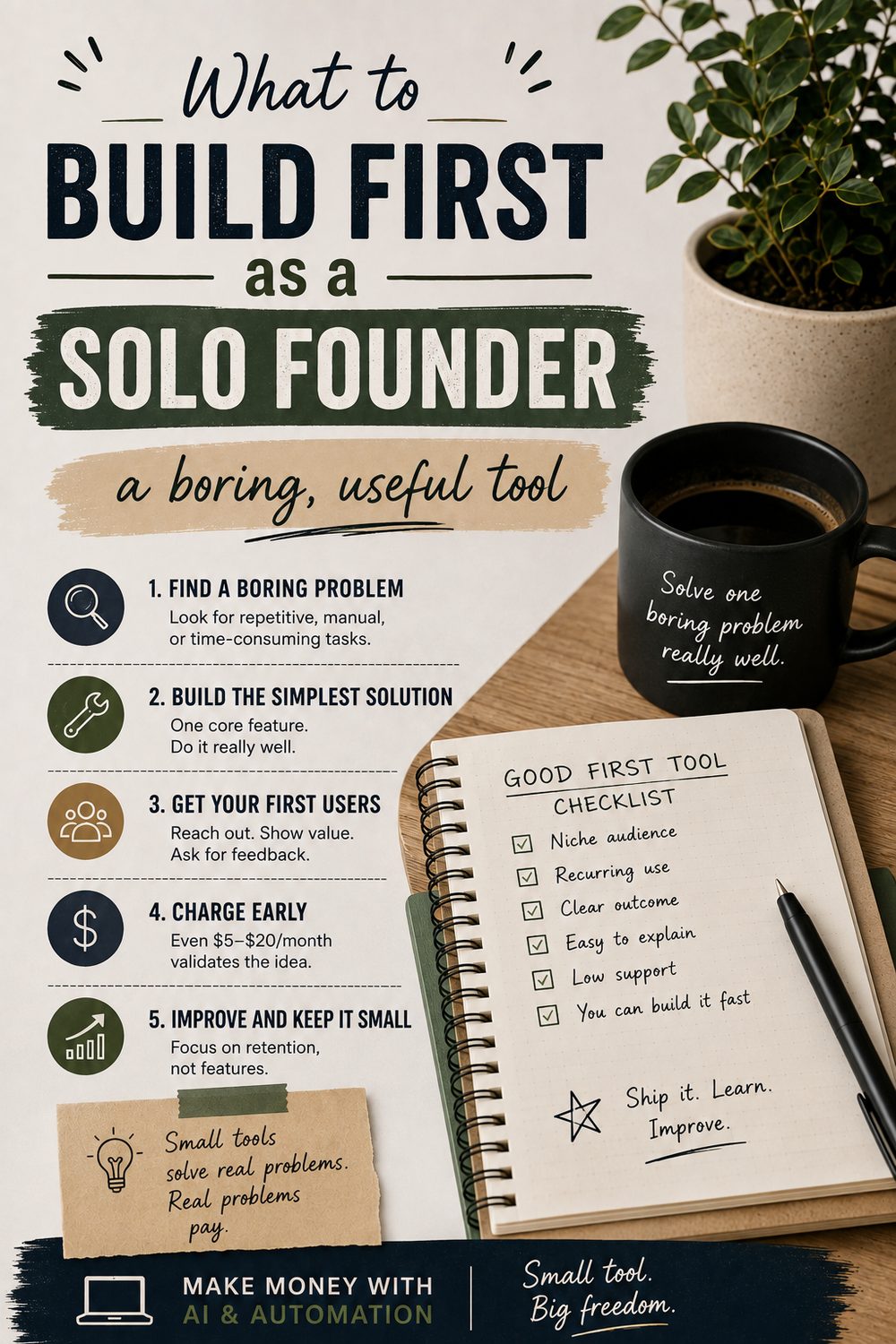
The smallest recurring problem you understand and can discuss with five potential buyers this week. Access beats originality. A modest tool for a reachable niche is a better business experiment than a brilliant platform for strangers.
Build the receipt before the dream
The most useful thing about founder stories is not the final revenue. It is proof that a narrow, unglamorous job can support a real product when the pain repeats and the buyer is reachable.
Start with five conversations. Run the result manually. Ask one person to pay. Build only the loop they used. Then watch whether they return.
That process is slower than typing “build me a SaaS” into an AI tool. It is also much faster than spending six months building software nobody needs.

Written by
I fixed my own money with a spreadsheet and a Sunday morning, and now I build the tools I wish I’d had. I manage a dental practice in Greensboro, North Carolina, and I have never once told anyone their problem was the coffee.